Showing posts with label parody. Show all posts

Wednesday, June 17, 2015

MIDI Week Singles: "Forest Theme" - Super Amazing Wagon Adventure (PC)


"Forest Theme" from Super Amazing Wagon Adventure on the PC (2013)
Composer: sparsevector
Soundtrack Released: Self Released
Developer: sparsevector
Publisher: Self Published


Before I wrote up today's article, I don't think I realized that sparsevector Amenábarred (or Rodríguezed too) this video game.  Think what The Men Who Wear Hats did with their Oregon Trail parody, Organ Trail, but instead of the zombie apocalypse, it's about heading out west, to Oregon (I presume since I haven't beaten the game) to strike it rich panning/mining/dynamiting for gold.  So more like Oregon Trail, but with automatic weapons. . .and rabid squirrels. . .and a retaliatory herd of deer. . .and a meteor shower. . .in space.

"Forest Theme" is the beginning song that you will hear every time you start up the game as it's the starting area.  It's that first song that sucks you into the retro-esque-ness of the world.  If you're going to be picky, as I occasionally am, the music here is beyond what you would actually find in the original Oregon Trail game and even possibly the 8-bit NES music processing chip, but the flavor is still there.  Basically it's a catchy little ditty that does its job very well.

And if you liked this one song, then you can hop on over to Mr. vector's bandcamp site and download the album for free (there's even a great rap remix version of the "Desert Theme").


~JWfW/JDub/Jaconian

Monday, January 26, 2015

Full Review: Weapon Shop de Omasse (3DS)


So I finished Weapon Shop de Omasse the other night, and then I finished it an additional four times the next day, but I will get to that later on.  This game was created by developer Level 5 (Professor Layton series, Starship Damrey) and conceptualized by Japanese comedian Yoshiyuki Hirai and that comedic sense and timing comes across frequently during the game, referencing both video game culture and TV culture; "I stick them with the. . .which end was it?" said one generic NPC during a battle.

Gameplay
As stated a few weeks back, Weapon Shop de Omasse is a comedic blacksmithing parody simulation of traditional JRPGs.  The game is spent between a number of mini-game-esque type tasks. 

1) Smithing: You are able to create various types of weapons (Sword, Dagger, Spear, Axe, Dao, Club, et cetera).  You strike the chunk of heated metal to a musical theme that is associated with a Hero character.  It basically acts like a rhythm matching/mimicking game, but you have to strike the metal in different areas and "carve" away the unwanted material in order to get the shape of the specific weapon you are creating.  While smithing, you also have to keep an eye on the temperature of the metal because if it cools down too much, the metal will not be as malleable and you will fail in your smithing task.

Chaining hammer falls will increase the bonus to whichever attribute
the game currently wants to assign your bonus to.
Smithing is actually where I had the biggest issue.  As you complete a musical phrase, you add a certain attribute (slash, pierce or bludgeon) bonus to that weapon although I was never able to figure out how the game decided to choose which attribute was going to be assigned.  For example, I would be smithing an axe that would need to have a high slashing attribute and the first two "chains" on a musical phrase would add points to slash, but then for the rest of the song, points would go to pierce and bludgeon.  Upon finishing, each weapon is rated (Lame, Not Bad, Good, Great) and if the weapon's primary attribute was rated as "Lame," your weapon would often be classified as "Dull," which is not something you want an axe you crafted for your Grandmother who is questing to find her husband to be swinging around.  I am positive I must have missed something early on in the game when this was explained, so that is my own loss.

2) Polishing: Once a weapon is created or returned, you have to polish it back to its presentable beauty.  Polishing also buffs a weapon's attributes (slash, pierce, bludgeon) by about 10 points in each category., you Weapons of various types and strengths are unlocked as the owner of the shop buys additional materials which allow you to create new weapons as well as your customers who return their rented weapons along with some items used to modify the weapons you make.

The rest of the game is spent keeping track of which weapons you have in stock, which weapons you need to make for heroes who have put in orders to be picked up later, and what materials you currently have in stock to create the aforementioned weapons.


Story

The story in Omasse, is a very stereotypical one for people who have played a JRPG or twelve: Small village near "Starting City" where you play as Yhan, an apprentice to the local master blacksmith, Oyaji where customers come in and rent weapons to complete quests in anticipation of the returning Dark Lord and his minions.  Yuhan and Oyaji have a subtle comedic relationship, but the majority of the laughs come from Oyaji's blunt reaction to characters who enter the shop.


There are a number of hero characters who have their own individual stories, which are fairly amusing and at times I often felt like a bartender, hearing them talk about some aspect of their lives and the particular quest they were going on.  And while you do deal with the hero characters, the other half of the time you deal with generic NPCs (which I found odd that they were all male where as there is one transgender and four female hero characters) who acknowledge the fact that they are not heros by saying things like, "Wouldn't you rather rent this out to a real character?" and "I like repeating the same actions!"


The Grindcast, which you can select a single person to read their feed.
Some characters will also use hashtags like #weaponreviews.
Half of the story is told by the face-t0-face interactions in the store while the other half is through a game mechanic called the "Grindcast."  Grind referring to the JRPG aspect of games grinding for levels between story points and Cast from, I am assuming, podcasts.  The characters are told that there is a device on each weapon that allows the people in the shop to keep track of them on their quest and the weapons.  The Grindcast plays in the background too while you perform various tasks around the shop (smithing, polishing, inventory management) and it can be kind of hard to keep track of what the heros are up to while also paying attention to smithing that wavy-bladed flamberge.  There will also be times when unlabeled and unknown characters' quest updates will appear on the Grindcast, but these are not explained and they come across as just general chatter.

[no_spoilers]There were two separate and unrelated story elements that I was surprised that the game took.  The first I saw coming but was still surprised that it happened, knowing that the "traditional American producer" would say that the audience would not want to see that happen to a character.  The second event I did not see coming at all and felt it was rather abrupt.  Upon later reflection, it made a little bit of sense, but it felt a little out of place.  That is all I will say[/no_spoilers].

Master Blacksmith Oyaji.
Proper protection is necessary around the forge.
Graphics

With the exception of some of the design for one of the hero characters, I was overall very happy with the overall look of the game.  Being on the 3DS, I was not going in expecting modded Skyrim level of graphics, but you could say that based on the title screen, I was expecting something more akin to Akira Toriyama with a little bit less in the spikey hair department.  There was one character who did look like they could have come from a Dragon Warrior game as the best friend or part time sidekick of Loto/Erdrick.


3D Effectiveness

The 3D effect worked very well for the majority of the game.  Most of the time I had the slider at about 50-75%.  My favorite part was looking over the various weapons I had created with the slider on, but seeing as how NPCs or heroes would frequently walk into the shop or I had weapons to forge or polish, there did not leave a whole lot of time (when I thought about it) to admire my handiwork.


Music & Sound

Since at least half of the smithing aspect of the game involved hammering out weapons to music, the music would have to be catchy enough not to become annoying; pretty much what every overworld and battle music in every RPG ever has to strive to achieve.  Each style of weapon would have a specific song associated with it and while the songs became repetitive pretty early on, the rhythm that you had to hammer out changed depending on the level of the weapon; higher level weapons mean a more complicated rhythm.

Some of the songs associated with the characters are rather silly and probably should not be taken too seriously, but if you are already in the mindset that this is a comedic game, then you will be right at home with the tunes.

Something else I found to be interesting was that there was no vocal localization for English speaking countries (not that everything has to be English-centric).  All of the spoken dialogue in the game, which came from Oyaji, is all spoken in Japanese.  I know can make the general sounds associated with "Lame, Not Bad" and "Great."  There are other praises/scolds you are given upon completing each weapon and you can tell by the inflection in Oyaji's voice if he is pleased or not.  You can also assume that a dull weapon should not be part of the store's inventory.  I was and am very glad that the games spoken dialogue was not localized, but then again I tend to favor original language and subtitles over dubbed versions of anything anyhow.


Final Thoughts
So the game took about 15 hours to complete and as far as I can tell, that will be about the average amount it takes in order to beat the game every time as the events are scripted and even if you make weapons faster than I did, it will not mean that they will be rented out and returned any faster.  Some people, who are better blacksmiths than I and better judges of character when choosing which weapon to rent out may not take as long as hero quests are repeated until they succeed and advance their story.

An additional 11 hours have not changed my high recommendation for Weapon Shop de Omasse one bit as I still would recommend it to anyone with a 3DS.  While the game became tedious at points and frustrating trying to figure out why my weapons were coming out dull or when my money became so low that I couldn't afford to but the highest level materials to make the strongest weapons for the higher level quests heros and NPCs needed to accomplish in order to help make the weapon shop money so they could afford to by better materials to make better weapons. . .and so on and so forth.  

But what is a fun and memorable game without a little bit of work and frustration?  Not worth playing in my opinion.


~JWfW/JDub/Jaconian

Monday, January 6, 2014

My Time In Evoland (PC)

Dr. Potts already did a full-on review about Evoland, which you can read here, and I highly recommend it, and not only because we share the same space here in internetland, but because it's a good article.  I however, after only just finishing the game not 10 minutes ago (upon writing this, not publishing today on Monday January 6th, 2014), wanted to give my own thoughts.


I really liked Evoland, although knowing from Dr. Potts that it was a short(ish) game probably helped in the development of my feelings.  By "short," I expected the game to be somewhere between 2-5 hours in length, and it took me about 3.5 hours from start to finish, although some of that time was spent trying to raise levels only to realize that that didn't matter outside of overworld battles.

As the good Doctor stated, I too wish that more time was spent in the 2D pre N64/PS1 era.  There was an area where you reverted back to Legend of Zelda (circa 1985), but that was only after you had been playing in 3D-Land for a while.  One aspect of reverting back to 2D graphics, was that the music also switched back to the classic NES 8-bit tones, but the music itself was the same.  I enjoyed hearing how the layering of instruments changed based on what "era" you were in.

But game length is very important here.  I felt that 3.5 hours was a perfect length of time for what the game was trying to accomplish.  If the game had been longer, I definitely would have felt cheated by how much time was spent in the early 2000's (Final Fantasy IX and beyond).  If the game were to have been twice as long, I feel that more time would have been spent playing as Gameboy Clink, or maybe even started at an earlier point in gaming history, such as with the Atari or the Intellivision.

All of that aside, again, I really enjoyed Evoland.  I feel that I was able to pick up on most of the references to video game history.  Even non-video game history, but general fantasy works, such as including A'Tuin from Terry Pratchett's Discworld series.  Other references  include Super Mario Bros., Diablo, The Elder Scrolls V: Skyrim, Final Fantasy VII and a whole helluva lot more, which is where I found a lot of the fun with Evoland.  I'm sure/positive that there were references that I didn't get, but I can't/won't mention them because I don't know what they were, hence the not getting the references bit.

It kind of reminded me of the way that "Weird Al" does his parodies.  They are often shorter versions of the original songs, but he gets his point across with what he's trying to do, although this is not always the case.

I will say that around the time that the game took on it's definite Final Fantasy VII and beyond tone, I did lose some interest.  Upgrades to the look and mechanics of the game became less and less and treasure chests which once held quips directed towards the video game industry and semi-ridiculousness of certain RPG rules, these chests started to contain Stars and Cards (Stars are there just to collect and Cards are used for a TCG, similar to the game card game used in Final Fantasy IX).  I felt as if I had reached the pinnacle of game development too soon as there was at least another hour of gameplay left.

Unlike Dr. Potts, I don't know if I see myself going through the game again, even  knowing what I now know about the overall length of the game.  The story was not very engaging, but I never felt that the story was a driving part of the narrative, or lack thereof.  It would be like playing Final Fantasy IV minus emotional investment and 50 hours of additional gameplay and story arcs.  So then why even play Evoland?  Because it's a game that knows who its target audience is and I like getting the references to other video games that I played 20 years ago.  In short, because Evoland is fun.

You know, I could easily see this concept used for other over-arching gaming genres such as Doom-style FPS' or even a Streets of Rage / Double Dragon type brawler-beat-em-up.  Although at the moment, it looks like Shiro Games is in development of a multiplayer adventuring game called Until Dark, which by the name and font alone sounds promising.  And now, a new video game development company to keep our collective eyes on.


~JWfW/JDub/Jaconian
A Future That Ain't What It Used To Be

Wednesday, May 16, 2012

Currently Playing 3: Abobo's Big Adventure

http://abobosbigadventure.com/

Abobo's Big Adventure is Awesome.  It's hilarious.  And it's actually pretty goddamn hard (in true NES fashion).  Please play it, so that you will no longer be missing out.
...
...
Oh, did I mention that it's FREE?!

The trick to playing Abobo's big Adventure is to download JoyToKey and play it on a controller.  The creators actually suggest playing it on an original NES controller using a converter.  This sounds awesome, but I don't have any NES controllers available to me, so I didn't bother looking it up.

Thursday, April 26, 2012

Currently Playing:


I do enjoy the box art
Cthulhu saves the world.  It's a fun distraction, bordering on a complete waste of time.  Which is how I would describe a lot of games, to tell you the truth.  But right now I'm little irritated with Cthulhu saves the world.  It's a funny game, and the first couple of hours are good for some snickering and old-school RPG nostalgia.  But by now, I'm 5.5 hours deep, and it's really not going anywhere.

Granted, this game is a parody of 8 and 16 bit era console RPGs, so it's not really out to impress anyone.  And as a part of the parody, there are some interesting gameplay modifications.  For example, the ability to fight all of the enemies in a given dungeon, and then walk freely after that.  Or how, after a given battle, the party is healed to full.  This streamlines the game, however, that's where some of the problem is- the game is too streamlined for the genre.


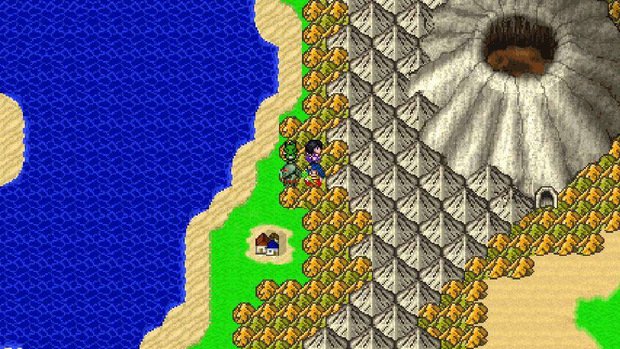
Neat Volcano
 As I said, 5.5 hours in, and I'm on the other side of this volcano.  I got here by finding a cure for a plague which had plagued the poor port town on some other island/continent.  The dungeon where I went to find the cure was pretty boring, and the town I landed in before the volcano was boring.  I think it was when I was searching all the bookshelves and drawers in the town, and one of the responses made fun of me for doing this- this is when I became suspicious that this game was falling into the 'suck' territory.  

I think it's funny that the narrator made fun of me for looking in every f-ing drawer.  But the thing is - there is NOTHING in any of the drawers.  Just jokes.  Lots of them, which I appreciate, but the game has basically no items, so there isn't much to find.  So, after wandering a useless city, I go to the volcano, and I am back in another dungeon, after only 5 minutes of time between dungeons.  It's just too soon to be in another damned dungeon.


BoD VII has boxart too!

I recommend playing Breath of Death VII first.  It's by the same makers, and it has many of the same themes and gameplay elements.  It came out before Cthulu, and features 8-bit style graphics.  BoDVII is much shorter, and I think it is a better game.  Cthulu tries too hard, but somehow without trying hard enough.  If you play Breath of Death VII and really like it, then go ahead and play Cthulu.  (Oh, I guess I should mention that I bought both of these games as a "two-fer" on steam, for 15 bucks.