Showing posts with label Game Scores. Show all posts

Monday, October 6, 2014

Game Scores - Jackal (NES)


Time to go to the land of Obscure, at least obscure from my point of view as I have only seen the NES game Jackal out in the wild in one place and I have never seen the arcade cabinet either.  This is a game that I played and borrowed form Delaños frequently, but due to my not great video gaming ability, I was unable to finish the game, or at least I remember being unable to finish the beast.

Since the soundtrack to Jackal is somewhat limited (clocking in at a second or two over four minutes), let us start off with the music from the first stage, title "Stage 1 & 4."


"Stage 1 & 4," as you could surmise from the title is the music that you hear in the first stage of the game.  For me, even the chugging bass line at 0:07 seconds reminds me of a not-s0-well carburetored engine.  The music is even timed to line up with the arrival of the jeep, which I find brilliant considering this is a straight up action run-and-gun that came out on the NES in 1988 (arcade cabinet was released in 1986).  What is interesting is that in the arcade version, the same music is still present, although it sounds very subdued and unlike the NES version, the chugging does not line up with the arrival of the jeep.

As for the melody, I cannot place it as being reminiscent of anything in particular, although it suits the game and action perfectly.  And what perfection those 32 seconds of music make!  Yes, this main theme from stages one and four lasts only 32 seconds, which probably should not come as a surprise, again considering this was 1988.


"Stage 2 & 5" is the longest track from this unreleased soundtrack, clocking in at around 1:26.  And this was not Shinya Sakamoto's first foray into military run-and-guns mind you, having worked with Konami in 1985 on Rush'N Attack (aka: Green Berets), which is why the music to "Stage 2 & 5" might have conjured up the memories from the first stage in that game; well, at least for myself it does.

By now you may have noticed the similar "bum-ba-dum-ba-dum-ba-dum" beat running through each of the previous two songs, as it will in the third, even though the melodies are all different from one another.  Again, possibly reminiscent of the sound of the jeeps, but this beat, I feel, keeps the player in the game, having a consistent and familiar beat running throughout the game.


Finally, "Stage 3 & 6." There is that beat again!  Like "Stage 1 & 3," this track is only about 32 seconds long and personally, the least interesting of the three songs used for the six stages in this game.  There is not one thing that I do not like about it, I just find the main melody to be not quite as catchy as that from the first two tracks.  It could also be that since the songs are broken up as 1 & 4, 2 & 5 and 3 & 6, that I heard the first two songs more frequently than I did the final track, probably never or at least rarely making it to the sixth and final stage.

So, more-0r-less, that is the main score to Jackal, although there are also the tracks for the boss battles, the prologue,  the credits and game over, but for a game that centers around drive-and-gun, the music for the stages has to be interesting enough to keep the player playing through similarly designed stages, breaking up the monotony and tension of not being killed.

Good music does that and Shinya Sakamoto's score is exactly what Jackal needed.


~JWfW/JDub/Jaconian

P.S. And for anyone wondering, "Jackal" refers to the type of vehicle used in the game Jackal, although fighting with the ferocity of a jackal is also perfectly valid.

P.P.S.  Just to note, this article started out as a MIDI Week Singles post, focusing on the music from "Stage 1 & 4" but while writing, I realized that the rest of the score was equally important and for the most part, just as catchy and nostalgic.  Half way through I decided that this would have to be turned into a "Game Scores" post instead.

Friday, September 5, 2014

Game Scores: Donkey Kong Country 2: Diddy's Kong Quest (SNES)


Yay, we now have a logo for this series!  What of it, I like logos.  I also like Legos.

I used "Lockjaw's Saga" in Wednesday's MIDI Week Singles article and that song got me to thinking thing that 1) I had not posted a Game Scores article in a while (since April of this year) and 2) that I should do a Game Scores article about the music in Donkey Kong Country 2: Diddy's Kong Quest because I love the music from that game.

Let us start off with the music from the opening Rare logo and title music, both of which do great jobs with setting the tone for both the rest of the soundtrack as well as the rest of the first area.

Now that is quintessential pirate music if I have ever heard it before and because of Disney's Pirates of the Caribbean franchise, everybody has heard piratey music.  Keep in mind though that this game/music/soundtrack came out eight years after this, but the sea chanty in one form or another has been around since the mid-16th century, so let us not go into a "Who did it first" discussion.

Normally, I would have included "Lockjaw's Saga" in this list, but I have already highlighted that song two days ago.  So let us move onto another chanty-esque song with "Jib Jig."
Even though the songs are pretty different, and apologies for drawing on Klaus Bladelt's score for Pirates of the Caribbean again, but this track reminds me a bit of what the cello part plays at the beginning of "Fog Bound," except here, it is a MIDI violin/fiddle.  It is just a great piratey (there's that word again) little diddy (eh!?).  Maybe even a little reminiscent of the Chieftain's score from Treasure Island?  For me, there is also something about the wind sound effect and blowing leaves in the background.  I want it to be October and ready for Halloween.

Speaking of Halloween, "Haunted Chase" is the next song I wanted to showcase.

Yes, "Haunted Chase" uses the theme from "Night on Bald Mountain" by Modest Mussorgsky / Nikolay Rimsky-Korsakov, but the "Haunted Chase" uses the main theme sparingly but is comprised of specific elements.  Instead of being a direct rip-off, the song takes pieces from such Russian pieces as Igor Stravinsky's "The Rite of Spring" with it's pounding percussion beats.  What I take from this song is to recall musical triggers that the audience has associated with both danger and the finale from Disney's Fantasia.  Taking all of this into account, the music is played during Haunted Hall, one of the (thankfully few) mine-cart sequences in the game, which I do not find to underscore the amount of danger and stress induced by both the level design and pounding sense of terror.

Lastly, according to David Wise' last.fm page, "Stickerbrush Symphony" is a favorite of his listeners as it is a favorite of mine.
"Stickerbrush Symphony" is just one of those mellow songs that is calming and relaxing to listen to.  The level that the song comes from however, Bramble Scramble, is anything but calm and relaxing.  The song reminds me a lot of the "Aquatic Ambience" from the first Donkey Kong Country.  Coincidentally, both songs have been covered by online acapellist Smooth McGroove as well as other musicians in various styles.  So yes, this song is easily a fan favorite.

Have a happy Friday all.


~JWfW/JDub/Jaconian
Engage the Laser Beam

Saturday, April 26, 2014

Game Scores: The Elder Scrolls Online (PC)


Just to get this out of the way beforehand, yes I enjoy this soundtrack and yes, I believe that it fits in very well with the music from the rest of the Elder Scroll series.

Now that that's out of the way, we can get down to brass tacks.

Jeremy Soule, the composer of the scores from the other games in the Elder Scroll series composed only the main theme, "For Blood, For Glory, For Honor."  This theme does not contain any semblance of the "Nerevar Rising" theme that has become the theme that most people know from The Elder Scroll series.  I feel like Jeremy Soule's contribution is to get the player into the mood to play an Elder Scrolls game in the 2nd Era, that this will be an epic adventure in a familiar world during an unfamiliar period of history.  It's basically an overture in the perfect sense of the word.  

The rest of the 47 soundtrack is broken up between three other artists. 

Brad Derrick, who wrote 43 of the 47 tracks is the most obscure composer on this soundtrack.  By "obscure" I do not mean that his music does not fit in with the overall tone of the game or with the setting that Jeremy Soule set with the main theme, but that there is very little information that I could find about him.  His last.fm profile is pretty stark while what looks to be the right Brad Derrick's website simply has "meep."  I was unable find a listing on IMDb.  All the obscurity aside, what Brad Derrick has composed fits very well within the Elder Scrolls universe.  Simply listening to his music, and not knowing that it is him, you might easily assume that you were listening to a Jeremy Soule score.  Similar to how if you listen to the score from Speed or Transformers you might assume that you were listening to Hans Zimmer and not Mark Mancina and Steve Jablonksy, respectively. 

Back to Brad Derrick, sorry for the diversion.  While I do feel that what Mr. Derrick has composed fits very well within the world, what he has written is not overly memorable.  That is not to say that the music is not any good, but I could not hum you one theme from any of the songs.  Now when a particular song comes on, say "Y'ffre in Every Leaf" or "The Tower Casts Long Shadows," I'll recognize certain elements and be able to hum/sing/whisper parts of the song.  But, but, BUT, there are a few songs that move beyond the usual "atmospheres" such as "Weapons Drawn" and "A Peril Upon the Sands," which sound more action oriented.

Rik Schaffer, the second composer wrote only two songs that appear on the album.  Rik Schaffer on the other hand has a bit more of a discoverable background when compared to Brad Derrick.  That fact aside, his contributions to The Elder Scrolls Online soundtrack is no less because of only two songs being included.  Both "The Heart of Nirn" and "Northern Nocturne" compliment both the Elder Scrolls as a whole and the music that Brad Derrick wrote.  I would almost go so far to say that their two styles are so very similar hear that they are practically indistinguishable, but maybe I just haven't listened to the soundtrack as much as previous soundtracks.

The final artist included on the soundtrack is also the final track on the album.  The song "Beauty of Dawn" was composed and performed by Malukah, a Mexican musician known online for her guitar and vocal covers of video game music from series such as The Elder Scrolls, Halo,  Mass Effect and more.  She posted a video back in November 2011 of a cover she did of "The Dragonborn Comes" from The Elder Scrolls V: Skyrim which, to date, has 12,009,584 views.  Apparently she attracted the attention of Zenimax Online Studios and was hired (?) to write an original song for The Elder Scrolls Online.  "Beauty of Dawn," while itself is a pretty song, I do nott feel that it has the *oomph* that her covers of "The Dragonborn Comes" or even "The Age of Aggression," both from Skyrim.  I have heard both this song and another (not included on the soundtrack) sung by a bard in-game while wandering around one of the various towns/villages in TESO, but a stripped down version that doesn't include the vocal layering that Malukah often includes in her compositions.

As a whole, I really enjoy the soundtrack and am very happy having purchased it from the store that sold it to me.  I first saw the album advertised through one of Bethesda/Zenimax's newsletters as being on sale through the iTunes store which had it (and still does) priced at $15.99.  I then thought I would check Amazon and they have the exact same album, all 47 tracks for only $8.99.  While I refrain from pandering to one storefront over another, I will not say were I bought the soundtrack, but as previously stated, I am very glad that I did and am satisfied with the price that I paid.

I will say that the soundtrack falls very heavily into the atmospheric category.  Maybe with the exception of the main theme, most of the tracks work well as background music for adventuring and exploring the landscapes of Tamriel, so I do not think that many people will be blasting the music during a backyard barbeque with the bros.  Maybe I'm wrong though.

If you are looking for a rollicking soundtrack that's akin to Hans Zimmer's King Arthur score, then you should and go and buy that album because that is an awesome soundtrack.  However, if you are looking for beautiful background music to put you near 950 years in the past before your 250+ hour video game, then this will probably be perfect for your collection.


~JWfW/JDub/Jaconian
Instrumental

Friday, January 10, 2014

Game Scores: Castlevania 64 (N64)


Since 1986, Castlevania has been a staple for great baroque-esque music despite have different composers in almost every game until Michiru Yamane came on board with the franchise in 1994 with Castlevania: Bloodlines.  1999's N64 release of Castlevania 64 was no different in the franchise however with regards to the composers.  This time around, Konami went with three composers, Masahiko Kimura (who later worked on Castlevania: Aria of Sorrow), Motoaki Furukawa (who had previously worked on Castlevania X: Rondo of Blood) and Mariko Egawa (whose only work on work in the Castlevania series would be this title).

I had been in love with the games and music of the Castlevania series since I first played and Castlevania 64 was no exception.  I remember on my first run through of the game, I chose the "Easy" difficulty which turned out to stop about halfway through the game  which then required me to restart on the normal difficulty setting to finish the game.  Although on my second pass through the game I did not receive the "good ending" until I re-replayed through the game again for a third time using Reinhardt Schneider, (I was never able to get past the Tower of Sorcery's disappearing platforms with Carrie Fernandez).

It wasn't until after I bought the soundtrack that I realized how good the music for Castlevania 64 was.  I obviously liked it enough to purchase the soundtrack, but listening to the music outside of the game environment is a different experience.  I remember after listening to the CD for the first time that I felt that I had listened to a film soundtrack.  While the CD did not contain all of the tracks and some of the incidental music that I had enjoyed in the game, there was so much music that I did like.

For the entirety of this review, I will not be able to say specifically which of the composers wrote which piece.  And being a Castlevania game, Castlevania 64 does reuse themes from previous games in the series and despite the fact that the staple "Vampire Killer" is not present anywhere on the soundtrack, I do not find that this detracts from the overall quality and enjoyment of the album.

The opening track is entitled Introduction/Opening or more majestically, "Sign of Blood Relationship," and also uses the theme from Castlevania: Bloodlines' "Bloodlines."  The song not only fits perfectly into the existing Castlevania universe, but is a great introduction into this Castlevania game.
That amazing violin solo in the second half of the piece was performed by Tomokuni Katayama, and even being surrounded by a MIDI score, the track sounds amazing.

The track "Lamented Rose" is both a beautiful yet ominous piece that really surprised me both in-game and upon hearing it in the soundtrack.  In the game, the music happens when your character enters a room and looks upon a flower vase and is confronted (I think) by the first vampire you meet in the game that isn't Count Dracula.  The scene plays out really well as a cut-scene, but we're focusing on music here.


One of my favorite tracks, both in-game as well as on the soundtrack is the "Dungeon - Main Theme."  Like a lot of the music from the game it is fairly subdued compared to other musical cues from the Castlevania franchise, but it works for this game and the world that was created.  The music creates the feeling that you need to keep plodding onward and that you may actually survive and not be turned into a vampire.

Lastly, I wanted to highlight one of the liturgical sounding songs, which almost seems required for a Castlevania game.  "Stairway to the Clouds" happens on your approach to Dracula's tower while going up flight after flight of stairs.  How many games can you think of that have something this dramatic, just to walk up a flight of stairs?

If any/all of these tracks have interested you into either playing Castlevania 64 on that N64 gathering dust in the garage or perhaps to pop on over to eBay to purchase the soundtrack, then you've made my Friday or whatever day it is that you are reading this.  Happy weekend.


~JWfW/JDub/Jaconian

Friday, December 6, 2013

Game Scores: Power Blade (NES)


This soundtrack is yet another one that I located over at FFShrine and since it was an NES game that wasn't released by either Square or Enix (before they joined forces), Power Blade never received an official soundtrack release.

Power Blade for the NES is a game that came out in 1991 from developer Natsume and publisher Taito.  Now, Power Blade is a game that I played once, probably during the summer of 1991 and never heard anything from any of my friends about it.  I may have talked about it after coming back from vacation, but aside from Nintendo Power # 23, I don't recall hearing anything else about the game from anyone, which is a bit of a shame because Power Blade was a decent enough game.  The gameplay was similar enough to Mega Man and Castlevania along with Contra-esque elements to be comfortable with the controls, but different enough from each of the aforementioned games to be enjoyable and still feel new.  Imagine controlling Bill "Mad Dog" Rizer through Dracula's castle with Cut Man's ability permanently equipped, but with upgrades.  That was Power Blade.

What also helped Power Blade feel even more familiar was the fact that the music was composed by Kinuyo Yamashita.  What's that?  You don't recognize her name?  Maybe you'll recognize her from one of her other alias', James Banana.  Yeah, I thought that'd ring a bell.  Yamashita did an interview back in 2009 where she talked a little bit about composing for Power Blade as well as another interview in 2010 where Power Blade is briefly brought up.  It's a decent enough read if you choose to do so.

Now, for why you're still here reading my drivel: the music!  Power Blade is a solid soundtrack for a science fiction, dystopian action/adventure game where you have to save society by restoring a worldwide computer system (the internet?) that has been taken over by aliens.  So how do you write music for that kind of a set up?  Like this!

You can just feel Castlevania and Mega Man pulsing through the music from the first stage.  Although Kinuyo Yamashita didn't write music for the Mega Man series until Mega Man X3 in 1995, it's very obvious why they went with Yamashita although surprising that they didn't seek her out sooner.

What I've found with a lot of the music for the stages is that they're not manic.  There isn't a sense that you have a set amount of time to finish the stage (i.e. a timer a la Super Mario Bros.or the first Castlevania).  The music is paced, as I've alluded to before, similar to that of Mega Man.  The theme to Sector 2, I feel perfectly illustrates that sense of running along rolling hills amidst a dystopian planet held hostage by Aliens.

Lastly, the music from Sector 5 is another wonderful example of NES era music that would sound fantastic performed by an 80s tribute hair metal band with talent.

Really, the whole soundtrack, which comprises 15 tracks of music and two incidental tracks for when you complete a stage and when you run out of lives.  Power Blade has a solid 20 minutes of music (including repeats) and while it definitely feels like it came out of 1991, this is what nostalgia sounds like, even if you've never heard it before.

~JWfW/JDub/Jaconian
Thank You

Monday, October 28, 2013

Game Scores: Final Fantasy USA - Mystic Quest (SNES)


If you're like me, then you might have been one of the many people who initially scoffed at Final Fantasy Mystic Quest.  I mean the cover of the game touted that it was an "Entry-Level Role Playing Adventure."  Entry-Level?  I'd been playing RPGs since Dragon Warrior.  I didn't need to have my hand held while fighting off monsters on my way to save the world.  I only played it because the game belonged to The Kid, although I can't remember if I bought it for her or she bought it herself.  Well, as it turned out, it was a pretty decent game and what surprised me the most was the music, which is why we are all here today.

I acquired this soundtrack over 10 years ago while buying something on eBay and this came as a "bonus gift."  It was one of five video game CDs to choose from and the only one that I had played, so I figured why not?  After listening through the whole CD, I discovered that I recalled the music more than I thought I would and that I actually enjoyed the music as well.

The music composed for Final Fantasy Mystic Quest was not written by then Squaresoft mainstay Nobuo Uematsu, but instead by Ryuji Sasai and Yasuhiro Kawakami.  To give you an idea of where this soundtrack is coming from, previous works from these two composers include Final Fantasy Legend III (Gameboy 1993) and Tetris (Arcade 1988).

So what makes this soundtrack surprisingly good?  We'll get there later, but first, let's start off with the main theme for the game which is played during the opening titles and is used for the overworld theme.
It's poppy.  It's bouncy.  It's upbeat.  Not really what you would expect from not only a Final Fantasy game, but from a game in a series where the threat of global destruction or evil overlordship is just on the horizon.  In almost any other J-Pop RPG, this theme might work, but upon first listen, Final Fantasy doesn't come to mind.  Is the song bad then?  Not really, just not something you would at first expect.

Now onto another theme heard throughout a large portion of the game.  This track is titled "Beautiful Forest."  Upon listening, I tend to find all the elements in the song needed to drum up the idea of a serene forest.  There might be enemies here, there might not.  Not too much to worry about.  There's probably also beams of light streaming through breaks in the trees.  Most likely a fair amount of moss.  You get the picture.


Ready for an adventure that sounds a lot cheesier than it actually is (kind of like that sentence)?  The track "Fossil Labyrinth" exemplifies this sense of adventuring in a questionable place then picks up the pace a bit as you get to the magnificence and awe portion of your exploration and finally, like any good RPG loop, you're dropped off again at the beginning of the track.  All of this occurs within 41 seconds.  You can't even microwave a Hot Pocket in that time without it catching on fire.

By now I hope that you're able to see where I'm coming from when I say that the music in Final Fantasy Mystic Quest is actually quite good, considering it's self label as an introductory RPG for beginners.  The final track is an arranged track that is found on the OST (Original SoundTrack), although the song itself is final dungeon music (Last Castle), this specific arrangement is not.  And, while I usually don't go for remixes of music from video games (not including orchestral arrangements), as this song is officially sanctioned and because of the song's quality, I am perfectly secure in my liking of this next song:

So, if any of today's tracks have intrigued you, I highly encourage you to give the whole soundtrack a listen to and if you feel additionally inclined, give the game a play.

~JWfW/JDub/Jaconian
Instrumental

Monday, October 14, 2013

Game Scores: Robin Hood Prince of Thieves (NES)


When you think of the NES game Robin Hood: Prince of Thieves, the first thing you might think of is the "debacle" between the Nintendo Power cover and coverage and the actual release of the game four months later.  Okay, maybe it wasn't that much of a debacle that I seem to remember, and that's not even one of the first things that comes to my mind.  I never even received that issue as I had forgotten to renew my NP subscription and this was the issue I missed.  (I recall this happening again and didn't get the Rescue Rangers issue either).  

Back to RH:PoT which was developed by Bits Studio and Sculpted Software and released by Virgin Games back in November of 1991.  The game itself was a lot of fun as it incorporated multiple modes of play.  There was the Legend of Zelda top down exploration mode, there was the side view mode for story specific duals (John Little being a god damn pain in the proverbial ass) and a massive melee mode where all the members in your party engaged in an overhead combat area against a lot of enemies.  It was quite, I think, revolutionary for an NES game near the end of the NES era.

But the reason I bring up this game, is because of the music, composed by English musician Paul Webb.  His credits are somewhat extensive and honestly, his score for PoT is all that I have that he has written, partly because I didn't have access to the soundtrack until a couple of years ago (downloaded from FF Shrine) as there was never an official release of the soundtrack.  So as you can imagine, the audio is just ripped from a port of the game, but it's still 1991 NES quality music, which might be a turn off to some of you reading this, or maybe not, because you are reading this.

Being a huge fan of the Kevin Reynolds' adaptation of the Robin Hood story, I wanted to play the game, and for Christmas in 1991, that dream became a reality.  But again, the music, which you will notice bares no resemblance to the music that Michael Kamen (What is dead may never die) composed for the feature film.  That doesn't mean that the music isn't any good as his music most likely wouldn't translate well for this kind of a game.  Paul Webb's music however, fits the world of 12th century England portrayed in a 1991 NES game as evidenced by the opening title music:


Great stuff.  The music for the melee battles I also really enjoy.  To me, it sounds like a mix between music that you would find in the first Gauntlet game and Teenage Mutant Ninja Turtles.  So basically a lot of enemies coming at you all at once that you have to fight off with your friends/companions.

Another short piece that you would often hear is the overworld music once you make your way back to merry olde England.  As with most overworld tunes, they have to be catchy, memorable and able to be repeated indefinitely.  So if you find yourself in 8 bit 12th England, and wandering from one screen to the next, we've got the music for you!

All-in-all, Paul Webb's score for Robin Hood: Prince of Thieves is not very extensive.   Comprising only 6 minutes 16 seconds of non-repeating music, not including 42 seconds comprising three tracks (one song and two jingles) of unused music, you certainly wouldn't know it by playing the game.  It doesn't span the length of an Nobuo Uematsu or Howard Shore score, but it does fit the setting of the game and it works.  And in the end, that's all I ask for when thinking about video game music.

~JWfW/JDub/Jaconian
Instrumental

Sunday, March 17, 2013

Emulator Hour: Faxanadu (NES)


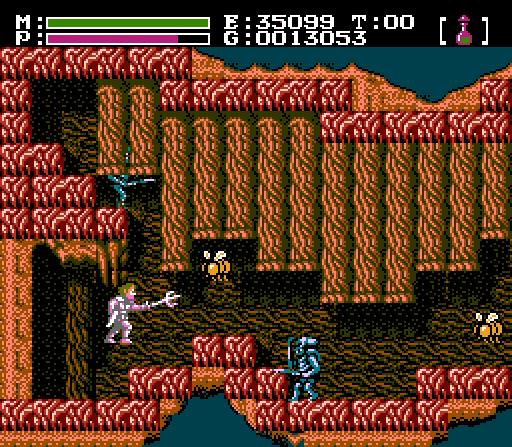
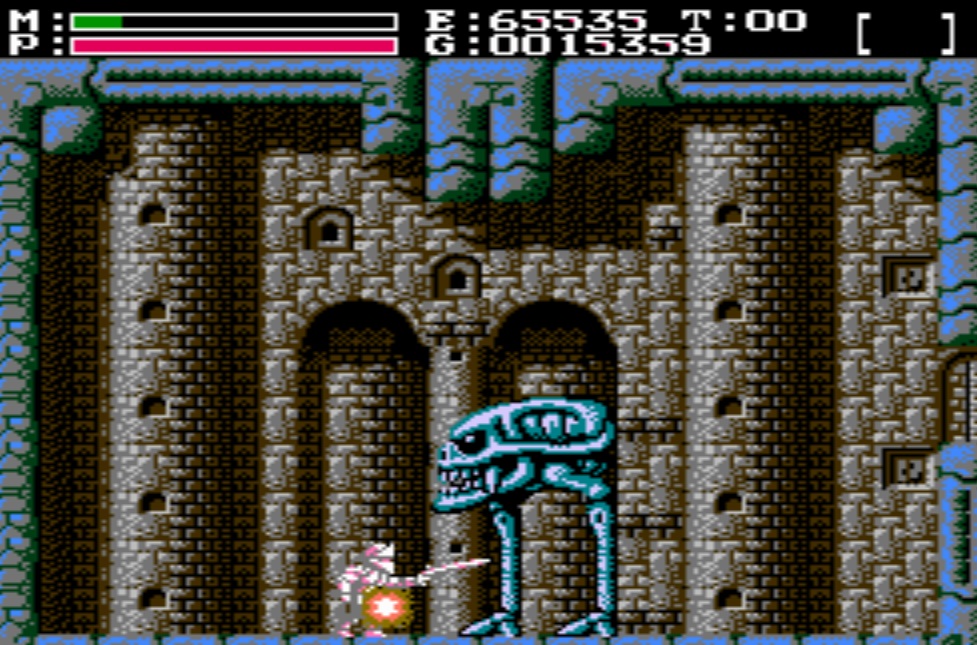
Why do I love Faxanadu so much?  It's one of my favorite games for the NES that I never owned.  I've spent some time thinking about this game, and I think that the graphics are one of my favorite parts of Faxanadu.  They may not seem like much at first glance, but I think they contribute strongly to my reason for carrying a torch for this game.  In addition, the soundtrack is one of the most interesting from the NES era.  

Below I show a progression of some of the different pallets and musical themes from Faxanadu.  The game's action starts at the base of the World Tree, travels up the tree a bit, goes inside the tree, comes back out, then ends up in the branches.  I love the idea of fighting through a giant tree.  This is a game that warrants a good remake.  Emphasis on good.


Muddy brown brick and a sky with a greenish hue characterize the town Eolis, cut off from their source of water and life.  
Eolis theme.  


The contrast is kicked up at the trunk; bright orange and green dominate, with a deep blue sky. The music picks up a bit.  


Purple foggy good times.  This was the furthest I ever made it on a rental. Delightfully spooky musical accompaniment.  
Mist Theme


Here we are in a branch of the great world tree. The music gets a bit more serious in tone. 
World of Branch Theme


Somehow there's a stone dungeon in the branches of this tree.  Another new pallet.  The music is a variation on the previous dungeon theme.  
Labrynth Theme

Monday, March 4, 2013

Game Scores: Teenage Mutant Ninja Turtles (NES)


Composer: Pseudo-Check
Emulator Hour Review: Check
Music: Checking


The music, composed by whomever it was that actually did it, is very good, considering it came out of  an 1989 era NES music chip, although other note worthy games with great soundtracks were Mega Man 2 and Dragon Warrior (1989 being their North American release).

The three tracks that I want to highlight are the "Overworld," "Mini-Boss Battle" and the "Title" themes.

Overworld:
Aside from the title music, this is the first in game music you hear, but unless you're there to listen to the music, you're only going to hear snip its of it in the first level as you're mainly in the sewers and not above ground a lot until the third level.  It's a great little ditty that got stuck in my head when I first played the game.  I've always wanted to drive around town in a van with this blaring.  It doesn't have to be in New York or with three other dudes (mutated or not), just a van and this music, because that doesn't sound shady at all.  Although Conklederp has a pseudo-van, so we might have to make this happen.


Mini-Boss Battle:
I actually like this piece of music better than the "Main Boss" music.  There's just something more driving about it.  And even though the song itself is only 20 seconds long, I feel it's one of those songs that can be repeated indefinitely and I just don't care.  And I think it's an easy song to sing/hum/whistle.  However, due to Youtube not wanting to allow me to embed the video I want, I will then just have to link it here: TMNT Mini-Boss Battle Music


Title:
Just listen to that MIDI electric guitar wail!!  I've heard some people (youtube "let's plays" mostly) complain about the music not being directly related to the cartoon, but if the cartoon music had been anything like this intro music, damn that'd be hot.  But, like I said, there's a riff that sounds an awful lot like the main riff to Queen's "Stone Cold Crazy."  That's one of the reasons why I wanted to know who the composer was to see if I could find out if they were influenced by Queen to properly attribute that one riff during the beginning of both songs to Queen.


With all of that in mind, I leave you with only three of 15 sound clips and songs from Konami's (pain in the ass) 1989 release of Teenage Mutant Ninja Turtles.  However, because I like all of you who read our blog, I leave you with the best cover of the music that I've found.  It's by the NESkimos off their album "NESkimo Bloodshed" and the track is simply titled, TMNT.

~JWfW/JDub/Jaconian
Now Go And Scoop Your Brains Back Up.

Saturday, February 16, 2013

Year in Review: Game Soundtracks

When thinking over the last year, since we started this blog, there's a few video game soundtracks this year that have gotten, and sometimes held, my attention.  Some are new, some are old, here are the video game soundtracks I've been listening to:


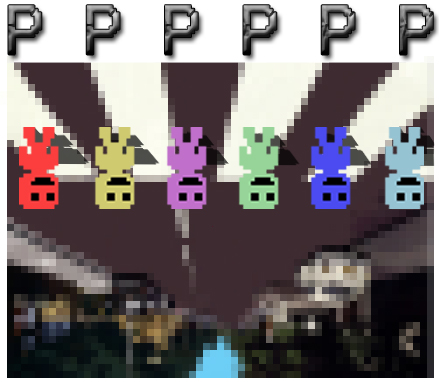
PPPPPP  (VVVVVV)
Souleye

VVVVVV soundtrack is fantastic.  The music really plays well into this game, helping to enhance the sensation of different atmospheric regions in a game that is very minimal, graphically. Case in point being the first time you leave the ship and go into the more open regions. The song for that region is sort of big and adventure-y. I got a feeling of invitation to explore, like in a zelda or metroid game.

I enjoyed PPPPPP so much that it spent a couple months of regular play on my  mp3 player.  Thank you to the Humble Bundles for including soundtracks as a regular feature of purchase.  What a great business model!

I've checked out some of SoulEye's other work, and unfortunately I haven't enjoyed it as much as PPPPPP.  This may be due to the sounds not having that 'lo-fi' edge, or it may be that the songs don't have an association with a game-environment, which has made the songs of PPPPPP more personal.


Bastion Original Sountrack
Darren Korb


the Bastion soundtrack is a really cool atmospheric blend of acoustic guitar and electronic music. I recommend this one, and I've listened to it a number of times.  The atmospheric blend of acoustic and electronic music works really well when I've got my mp3 player on random.  I feel like the moody grooves of the Bastion soundtrack will have a wide-reaching and long-lasting appeal.

I didn't play much of Bastion because it doesn't run that well on my computer - lots of slowdown.


Proteus Worms Present:  Nodeland Dreams and Memories (Proteus)
David Kanaga

Proteus soundtrack is very involved with the gameplay.  I don't think of it as something I'd want to put on my mp3 player to listen to at work - except, that might actually work.  Ideally, I would want recordings of someone actually playing the game, rather than some sort of generic soundtrack-thing or remix, a-la bit.trip.runner.  I believe Jaconion will be bringing more on that game's soundtrack to you.

This album is just one, ten-minute track, and was free to download with the game purchase at humblebundle.com - I've only just downloaded it, so I can't review it as a stand-alone item until I've given it a few listens.  I enjoy gushing about all things Proteus, so I'll be sure to give due attention to this soundtrack.

==========================

A couple classic soundtracks that have been bouncing around in my mp3 player:


Mega Man I
Manami Matsumae & Yoshihiro Sakaguchi
Mega Man II
Takashi Tateishi, Manami Matsuma & Yoshihiro Sakaguchi
Mega Man III
Yasuaki Fujita

These sountracks are, like the games themselves, classic action game soundtracks.  Mega Man II gets lots of love, and it is well deserved.  Megaman III is nearly as good, but seems to have learned everything it knows from II.  I also has some catchy tunes, particularly Iceman, imo, and is interesting because the mold had not been settled yet on what Mega Man was to be.  (It even had a score)

Many thanks to my esteemed colleague, Jaconian, for turning me on to these and many other 8-bit soundtracks.  Without his hard work and research and others like him, I would have no idea how available video game music can be.  


Secret of Mana
Hiroki Kikuta

I really love the secret of Mana sountrack.  This one returns to rotation again and again.  I can just look at the cover art and listen to the soundtrack and I am brought to a happy place.  What I wouldn't give for an online remake of this game.

=====================

Honorable Mention:  I downloaded the Super Brothers - Sword and Sworcery EP - soundtrack, by Jim Guthrie,  but I haven't actually listened to it.  Just one of those things I haven't gotten around to doing.  This doesn't bode well for the soundtrack - which initially made a good impression on me.  If I do end up listening to, and enjoying these songs, I'll be sure to post about it here.