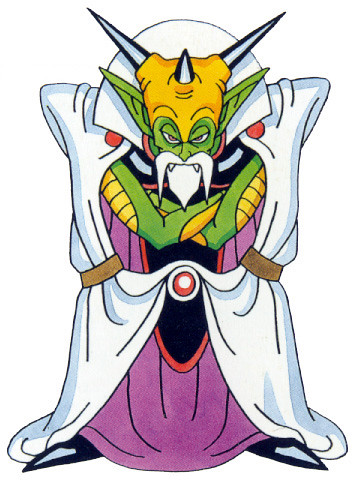
Showing posts with label Koichi Sugiyama. Show all posts

Wednesday, November 19, 2014

MIDI Week Singles: "Fight Theme" - Dragon Warrior - (NES)


Title: Fight
Game: Dragon Warrior
Developer: Enix
Release: 1986
Platform: NES/Famicom
Composer: Koichi Sugiyama
Arrangement: Takenori Yamamori


I've really been on a Dragon Warrior kick lately, so why not share this singular musical track from the first Dragon Warrior?

To the unbiased ear, the early NES sounds from DW may be somewhat grating, really not the best MIDI, and the compositions, in general, may not seem like anything to write home about.  However, each song has a special place in my heart, and none more so than the battle theme.  I love it because it leads me to ask:  "What the heck is going on with this theme?"  It's so odd!  So delightfully strange.  It's only the bridge at the end that sort of ties the thing together.   

Instead of using speed and heavy rhythm to generate excitement and create a sense of danger, the composer chooses to use a bizarre melody.  And it works, the much calmer sounds of the overworld map are very relaxing by comparison.  So yeah, big kudos to Koichi Sugiyama and Takenori Yamamori for this unequaled track among video game battle music.  

-D


Sunday, October 21, 2012

Video Game Music Composers: Results and Analysis

First off, sorry this post is two days late.  That's what happens when you, meaning "I," work in the social services industry and stay up late playing video games or general internet putzing, only to wake up around noon and have to leave for work before 2pm.  It's called poor time management.

So now on with the results and analysis and not make it sound like a college freshman's term paper.

As I stated in the previous post, I was a little surprised that people generally didn't know the composers of some of the more famous video games, albeit, older video games, but maybe that was a problem with the questions that I posted: were the games too old?  Or is it that people are not as interested in the composers of video game music.  

For the survey questions, I had to be game and not series specific, as in "Do you know who wrote the music to Final Fantasy IV (Final Fantasy II in the US) (1991)?"  I couldn't say "... who wrote the music for the Final Fantasy series" because there've been a number of composers besides Nobuo Uematsu, over the years who've helped from about Final Fantasy X on.

Results:

21 People took the quiz
21 People answered the first question
20 People answered the first two questions
19 People answered questions 1 - 9
17 People answered questions 1 - 10

With just this information, you could say that some people became frustrated with the questions and quit.  With the two extra "skipped questions" on question 10, I think that people gave their answer but may not have pressed the final "submit" button.  Maybe.  That's just my guess.


Now the questions portion.  For this, I will just list the game, the system and years they were released, rather than type out the question in its entirety.

1)  Super Mario Bros. NES (1985):  14.3% knew that it was Koji Kondo.
2)  Mega Man 2  NES (1988):  5% (or one person) knew that Takeshi Tateishi & Manami Matsumae.
3)  Dragon Warrior/Quest  NES (1986):  0% knew that it was Koichi Sugiyama
4)  Zelda II: The Adventure of Link  NES (1987):  0% knew that it was Akito Nakatsuka
5)  Final Fantasy IV / II  SNES  (1991):  26.3% knew that it was Nobuo Uematsu
6)  Castlevania: Symphony of the Night  PS1  (1997):  0% knew that it was Michiru Yamane
7)  Donkey Kong  Arcade Game  (1981):  0% knew that it was Hirokazu Tanaka
8)  Killer Instinct  Arcade/SNES  (1994):  0% knew that it was Robin Beanland
9)  Warcraft II: Tides of Darkness  PC  (1995):  0% knew that it was Glenn Stafford
10)  Metroid  NES  (1986):  0% knew that it was Hirokazu Tanaka.  (5% or 1 person guessed that it was Koji Kondo).


Looking at this list, you can easily see that I grew up playing on Nintendo consoles.  I didn't realize I didn't have any Sega games on there until just now.  However, I feel that even if I were to have put Sonic the Hedgehog (1991) or Golden Axe (1989), that I still would have similar results.  And the answers would have been Masato Nakamura and Tohru Nakabayashi respectively.

With the games/music that I chose, I felt that they are very representative of popular music from video games.  Music from these games are frequently covered by video game cover bands (Nintendocore is a thing).  And whenever "the best Castlevania" game comes up, Symphony of the Night is right up there in being one of the most popular in the series.  It would be like asking someone, "Who wrote the music to Star Wars: The Empire Strikes Back?" and getting the response, "Oh yeah, I love that movie.  The best one in the series.  Oh um, yeah, I don't know who wrote the music.  John Williams?  Yeah, I think I've heard of him."

This leads me to four possible conclusions.  

1)  That some/most people who play video games do not pay attention during the credit sequence to who wrote the music for the game.  This could stem from these same people either not finishing the game to get to the credit sequence, or just being the type of people who do not sit through film/TV credits.

2)  In a number of games released (I'll just say on the NES since that's where most of my early gaming background is rooted), game composers' names were misspelled/mistranslated, a pseudonym was used, they were lumped in with "Programmers" or their names were not included at all.  In the case of Castlevania, Satoe Terashima was listed as "James Banana."  To find out real names and identities takes a bit of detective work, which could just be too much work.

3)  Video game soundtracks before the internet became standard in every house/phone/car/bathroom, were fairly difficult to obtain if you lived outside of Japan.  I first saw them at Star Trek conventions lumped in with the anime soundtracks, and even then, their prices would be astronomical.  Well, $70 for 45 minutes of music is astronomical to a 13 year old.

4)  The majority of the video games that I've listed are by Japanese composers and a lot of the times I have trouble either remembering their names or how to spell them.  I am sure there is a "thing" in our brains that makes it difficult to recognize and remember names and words that we do no recognize, especially if they are not in our native language.  If this is an actual thing, then I am sure that it would apply to not remembering/recognizing the above names as well.


One possible explanation though for why people knew Koji Kondo and Nobuo Uematsu is that they are more known in the United States market than possibly any other Japanese video game composer.  Nobuo Uematsu has toured the United States on multiple occasions with Final Fantasy: Dear Friends.  Koji Kondo has also been states-side with Play!

The question basically comes down to: "Why don't people know x?"  For that, I have no definitive answer.

~JWfW/JDub/Jaconian
The Truth Is Out There

Monday, October 15, 2012

Introduction to a Theory about Video Game Music Composers

"This is the first entry in what I hope to be a series of posts about composers/programmers of music in video games.  And not just any composers, but composers that we either don't know much about or have miss-attributed soundtracks to.  What do I mean by "miss-attribute?"  Okay, when you think of the music from the Legend of Zelda series, who comes to mind?  Right, Koji Kondo.  Except that he didn't write the music for Zelda II: The Adventure of Link.  That soundtrack was composed by Akito Nakatsuka.  Who is that you ask?  In short, he also wrote some of the music for Mike Tyson's Punch-Out!!"

The above was my going into what was originally planned as a series of about nine to ten posts, focusing on individual composers and why some soundtracks are miss-attributed to them.  As an avid collector of soundtracks, I had thought that knowledge of video game composers would be about as prevalent as knowledge of film music composers.  Granted I only know of a couple by name, and those're some of the big guns: Nobuo Uematsu, Koji Kondo, Koichi Sugiyama, Hitoshi Sakimoto, Yasunori Mitsuda, Robin Beanland and David Wise.  

As it turned out, this happened to be one of those instances where when you grow up with a particular thing, like a dad who collects and chops/cuts and stacks firewood, that you think that all dads do that.  Turns out a lot of dads do not drive out on county roads looking for felled trees or asking people who have had trees cut  down if they would mind if their wood was taken out of their gutter.  Who knew that wasn't normal?  Turns out knowledge of who the composers of video game music are and what games they've composed for is not common knowledge.

I found this out when I put up a survey seeing if 1)  If people knew who wrote the music to a particular video game and 2)  If they knew, then they were to put down their answer by name.  My theory was for example, that if someone would think that because Koji Kondo wrote the music to Super Mario Bros. that they might think he wrote the music to Dr. Mario.  Or, as in the first mentioned example of Zelda II: The Adventure of Link and Mike Tyson's Punch-Out!!

In the following post I will give the results and my initial analysis of the data that I collected from the survey (which when I last checked was only 20 people).  So with this in mind, I will now leave you with a couple youtube-ified tracks from various video games soundtracks that I absolutely love:


Tooth & Claw by Robin Beanland : Killer Instinct


Overworld by Koichi Sugiyama : Dragon Warrior


Sacrifices by Yuzo Koshiro : ActRaiser

~JWfW/JDub/Jaconian
I Can Just Hear It Now

P.S.  If you would like to take the aforementioned survey, here is the link: http://www.surveymonkey.com/s/XSYPF3N  And please do not look up any information before taking the survey as I am/was trying to find out people's existing knowledge.  Thank you.

Friday, June 29, 2012

Full Review: Dragon Quest V - Hand of the Heavenly Bride (DS)


I just finished Dragon Quest V: Hand of the Heavenly Bride (hereto referred to as DQV) on Sunday afternoon and thought it apt that I have a post to do today, which was originally intended for Monday's post but I wasn't able to get around to writing/posting it because my sister was in town.  Yes, I'm blaming my sister for my inadequacies as a blog posting human being.

I started this game on the DS maybe six months ago, so around the middle of January 2012.  I had recently completed Dragon Quest IV: Chapters of the Chosen (DQIV) and wasn't tired of 1990's style Japanese role-playing games. And DQV, is very much that, a typical RPG where you have a main character, up to three companions who all raise levels while completing story elements and end up saving the world from an evil king/tyrant/overlord/dictator who is somewhat one sided.


~*SPOILERS*~(With intentional bits left out)

Monsters & Villains

In these types of RPG's, I don't seem to immediately question why the world is full of monsters. I don't care that there are random encounters or how world economics would work with all these effing monsters everywhere. But you know what, I don't care. I just figure that the world work well enough until Grandmaster Nimzo decided that the Underworld wasn't where it was all at and decided to take over the rest of the planet, there-by releasing a shit-ton of monsters upon the earth.

As previously mentioned, I felt that Nimzo was a bit of a flat, one sided main villain. He was talked about quite a bit by his lackeys, but really only as this all powerful being who will take over the world. So he's not an overly original villain, but again that was fine with me as I was able to keep in mind that this game was developed in the early 90's and came out in 1992; so it's a 20 year old game with updated graphics.

The monster design was very similar to DQIV and had some familiar characters from the previous Dragon Quest games, which I feel is very much a part of the series.


Music

This will be the shortest of the sections. As with previous Dragon Quest remakes, the music has been revamped from Koichi Sugiyama's original score and it all sounds great. That's it.


Gameplay

Like all previous games in this series, it's a top down view in both world map and towns.  You walk around and talk to people.  When you're not talking to people you're fighting in battles.  Battles are fought in first person and are turn based.  There's not really any use for the bottom touch screen, which is kind of sad considering the system it's on, but the lack of a touch function didn't detract from the game.


Story

The story here is somewhat non-original but it's done in a very original way. Wait, what!?

Here's what I mean. The story goes that a "Hero," someday, will arise and save the world from the destructive plans of the evil warlord Grandmaster Nimzo. You start the game with that bit of knowledge. The world is already going down the toilet, but a Hero is coming. Oh, and when the game begins, you're only six years old and traveling with your father who's some kick-ass travelling warrior with an honorable reputation. You find out soon enough that your father is on a quest to find the "Hero," already knowing that he isn't it because he can't equip the Hero's gear (A sword, shield, helmet and armor).

The child aspect was really interesting. You couldn't read many books(shelves) and only understood some words or basic themes. You were often told by NPC's that you couldn't leave the town or enter certain areas, again, because the character is only five.

One thing leads to another and your character and friend are kidnapped and sold into slavery, helping to build some grand temple for Nimzo. Jump ahead 10 years. Your character and friend and another random slave manage to escape to find the world very similar to how it was left. This was a bit of contention for me. Both you and your friend have been in slavery building an evil temple for the last 10 years and after escape, come away nearly unscathed emotionally. A kingdom even makes your friend their king because he was their prince before said kidnapping. Okay, maybe it didn't/doesn't bother me all that much, but maybe I just wish that it did. I'm suspending my sense of disbelief anyway.

So your friend becomes king and you're going back to adventuring, like any good son-of-an-adventurer would. In your travels (by boat), you come across the scenario where you are "forced" to be married. In the original 1992 game, you had a choice of two women, but in the DS remake (as opposed to the 2004 PS2 remake) you're given a third choice, who is the vindictive sister of one of your choices. Just before choosing, I decided to make multiple save files to find out how parts of the game progressed with a different wife. The first time though, I chose Bianca (who was a childhood acquaintance) as it seemed like that's what the game was setting up for you to do anyway. So you're married and like any solo adventurer, you have sex with your new wife and she becomes pregnant, eventually giving birth to twins, a boy and a girl.

One thing leads to another and you and your wife are turned into stone statues by one of Nimzo's lackeys. Your bodies/statues are found and sold to a rich family living on an island. You then watch the game as eight years pass by, seeing your wife eventually sold off again as the rich family seem to lose money because the world is becoming worse because of Nimzo's eventual coming into the world to take it over. Eventually your children and friends find your statue and are able to restore you to your normal self.

While out adventuring with your children and searching for your wife (their mother), you find pieces of the Hero's armor (thought I'd forgotten that bit didn't you?) and discover that one of your kids is able to equip them. Oh, and you also get your "airship" and are able to traverse the entire world now, or at least the places where it can land.


The End Game

After you find your wife and restore her to normal, it's about time to enter the Underworld and kick Grandmaster Nimzo's ass. Which is pretty much all that you do. There's a quest to obtain a key from some giant-ass giant in a bottle (as in you have to fight him from the top of a tower because that's how tall he is), which I admittedly had to look up on gamefaqs because I didn't even know that this existed and didn't know where I had to go to progress the story.  But anyway. 

So you travel to the Underworld, defeat Nimzo. My issue with this battle is a little minor. One of your children ends up being the "Hero" that will save the world from Nimzo. We know they're the hero because of the Hero's gear. Aside from having really good stats, it doesn't seem to play in anyway into the final battle. The child that was wearing all of the said gear, I had casting support spells and then attack spells for the majority of the battle. The so-called awesome sword, I don't think touched Nimzo because it didn't do as much damage as casting a lightning spell. I found that to be a little disappointing.

Okay, so peace is restored to the world. You travel back topside and visit a couple of notable cities from your quest, eventually taking you back to your kingdom where a dance is held. Roll credits.


Final Thoughts

Was this the most compelling RPG I've ever played? No, it was not, but it was a lot of fun. I did really like the age progression, even if it was done in odd jumps. However, how often is it you are able to play the same character at 6, 16 and 24? I also liked how the game didn't start with you somehow screwing up the world or letting out some impossible evil and it's your quest to go and fix your mistake. The world was already messed up by the time your character became aware. And then there's the whole part of the game about letting specific monsters join your party and training them, which sounds oddly familiar, but can't think of what it reminds me of.

Throughout the game, I didn't feel as emotionally attached to the characters as I have in other RPG's such as Final Fantasy VI or Chrono Trigger. I attribute this fact to that while the story was somewhat mature, the world created for the story was not. Keep in mind this isn't so much a criticism as it is an observation. 

So that's really it. I would recommend this game to anyone who has played any other Dragon Quest game or if you enjoy early RPG's akin to the Final Fantasy series. 

I put in 49 hours 13 minutes into playing the game, I think I can say that I enjoyed Dragon Quest V: Hand of the Heavenly Bride very much.

 ~JWfW/JDub/Jaconian
Full Frontal Reviews Done Here