Showing posts with label design. Show all posts

Tuesday, November 25, 2014

What I mean when I talk about Graphics

The body of this post was originally composed about two years ago when this blog was brand new.  Because of my difficulty in articulating my thoughts, opinions and convictions, this post sort of floated around in draft form for those two years.  I recently read an essay over at Gamasutra on the same subject and decided to dredge this old post up, dust it off and finally publish it.  I think the subject of graphics has long been an important one in Video Games, though it does seem to be pretty much the same story as when I was a teenager.  Bigger, better, higher, faster.  If this subject interests you at all, have a look at the Gamasutra article I've linked here, and share any thoughts or resources you have on the subject.  Thanks. -D   


no denying this is purty, but is it enough?


When it comes to Graphics, I have always been and will always be, something of a hypocrite.   At least, it will seem that way to everyone who isn't inside my head, or doesn't understand me in that special "nerd" way.  I will, on the one hand, whine endlessly about graphics.  About too much focus on good graphics.  Too many bells and whistles, and not enough depth.  And then, on the other hand, I will dance a jig and praise halleluja to the graphics of games I like.  This is a pattern I plan to never break.

For example: in the case of Minecraft: it’s hard to call the graphics ‘good’ per se, on some sort of linear scale of supposed ‘quality’  - however, it’s easy for me to call the graphics ‘awesome’ because they are.  It’s more a design thing than a photo-realistic thing.  Photorealism is a keyword here.  There is a belief somewhere that this is the pinnicale of graphic representation, and I have to disagree with that. 


When I was younger, I believed in photorealism.  I believed that was the sort of art that required skill, and that abstract art was just nonsense.  Funny thing though:  I have no memory of cartoons as art, or my opinion of cartoon art.  Cartoons were simply alive, and I loved them.  It never occurred to me that they might be art.  Maybe this is one of the best measures of art. 

Bridging the gap from cartoons to realism is comic book art.  I thought Jim Lee and Mark Bagley were the best comic artists of the 90s.  This was in part because of their ability to convey realism, but, growing older, I see that their version of realism was highly stylized and not really photo realistic at all.  But even that level level of realism isn't necessary for enjoyment.  


Quintessential Jim Lee artwork from my childhood


It would be nice to have a better vocabulary for these things.  To better be able to explain what I mean.  I'm going to work on that in this post.  Jac, I'm sure you know what I'm talking about.  Little help?

Jaconian's Interjection: I totally get/agree with what you're saying.  I'll argue that with some Final Fantasy games, that they've moved away from story and focused too much on the look and graphics of the game.  "It's not all about graphics!"  But then, when I play say, Wave Race, I'll be like, "It's a pretty standard racing game, nothing overly special.  But dear god man, look at the water!  It looks fucking real!"  That might not be a great example, but I understand where you're coming from.  Another one is the "updated" graphics in Dragon Warrior in the US from Dragon Quest in Japan. 


In the image you can see the difference in sprites and in the article is says that the character always faced that direction, regardless of the direction.  I tell myself now that that would bother me and the "better" graphics are better for game play, even though graphics aren't a big part of why I find that game/series to be so awesome.

Another thing that I've found myself being a hypocrite about, in a similar manner to graphics, is the quality of music in games.  I can listen to the Legend of Zelda overworld theme for hours on end, with it's simple three tone musical awesomeness.  But then with the music from Ocarina of Time, I'll go on for hours about how the music sounds like not-so-great MIDI.  Additionally, the sound quality between the two is different and while there are sound quality improvements over the original soundtrack, ultimately I feel that there was a shift away from melody to atmosphere

OR, staying with Zelda, the graphics and design of the game (like what you said in your previous post) are perfect for  he game.  BUT, if there was an updated remake with either the Wind Waker or Majora's Mask engine, I would be singing its praises even before I got a chance to play it.  Maybe that's because it's something we've been talking about since Ocarina of Time came out.


Yes, graphics sure do represent a mixed bag of experiences.  And it seems like that is the key to the whole thing- how do the graphics affect your experience of the game?  Arguably, with the Dragon Warrior example, your play experience probably wouldn't have been affected much by the graphical updates.  If nothing else, the fact that the character always faces the same direction may have been slightly distracting.  But, then again, it may have been more distracting than I imagine.  I always accepted that the 'open world' style design of Dragon Warrior is a place with four cardinal directions, and that the characters within have a front, sides and a back.  The idea of every character sort of 'strafing' along is kind of distasteful.  But I'm probably over thinking it, which is okay; I like doing that.

I guess when thinking about graphics, it is good to think about how they are used.  In the case of Wave Race, it may be good to note that the game took place in many different settings.  The first that come to my mind is 'Drake Lake,'  which has the most dynamic graphics in that game.  Here, the fog-lifting action on the third lap sort of 'shows you what you've been missing' to great effect.

However, even without the fog-trick from Drake lake, the water effects on Wave Race are awesome.  More than any other racing game, Wave Race gave me the desire to drive off of the course and just go exploring.  I think the water effect had a lot to do with that.  A water environment is so much more interesting than a racetrack environment.  I only wish they had actually supplied an open world track.  Or, hey - you know what would be awesome?  A Jetski option in Pilotwings!  For close examination and exploration of the coastlines and islands. 

Alright, I'm getting distracted here with another one of my random 'you know what would be cool?' game ideas.  Ultimately, I'm not sure what my point is here.  Except maybe that 'my opinion is my opinion and that is that.'  Which is kind of... a moot point to begin with.  Anyhow, when I look at the industry, I see a lot of hyper-realistic big AAA games, but then I also see some really cool artful and abstract indie games.  So, I keep my attention on the indie games, but I do wish that the masses being catered to by the big-industry could see and appreciate the games I love.  And that's normal, isn't it?  


-D


P.S.  Since I originally wrote the bulk of this post, I had the great pleasure of reading Scott McCloud's fantastic 'Understanding Comics' series.  I highly recommend this book to anyone who is interested in comics, art and design. I found the contents relevant to subjects outside comics; including video games. He puts forth this idea of Realist vs Iconic graphics, and puts them in this nifty Triangle (below), which he cleverly calls the 'Big Triangle.'  He has a breakdown of the Big Triangle on his website.  Go check it out, why not?


Wednesday, December 11, 2013

FEZ: revisited


FEZ may very well be a masterpiece.

The attention to detail, visual design and editing really come through.  This game has been meticulously crafted, and I love it.  It's almost like a challenge just to enjoy all the fine details.  

Contrary to my first impression, I now see that the movement is consistent.  The puzzles are amazing.  How does he do it?  The learning curve is steady and challenging.  Once you learn to use the map system, the game opens up.  The little graphical details are delightful.  This is truly a love letter to 2d platform gaming with a really well conceived and executed mechanic.  Bravo!

Fez is not a clone of anything, and it is proof that the retro platformer can still be innovative.  If I were to estimate the mechanical level of FEZ, I would guess playstion 1/Saturn/Nintendo 64 era, but it's hard to tell.  The game is so dense, that I experience some slowdown at times, yet I have no problem emulating the PS1.  The number of little sprite animations is awesome, and may just be a bigger processing strain than I give it credit for.

My one nit pick thus far is that I can't control the camera zoom.  I'd like to get a closer look sometimes, but I am unable to do that.  This is a bummer.  

Also, this game brings to mind Voxels.  I haven't played with them much except for the first Humble Bundle I bought, the Humble Voxatron Bundle.  Voxatron was a fun little 3d shooter made of blocks, like Minecraft and Fez.  What an interesting developement for 3d games:  3d blocks, rather than polygons. I'm for it!

I'm playing FEZ in a little bit of a different way than usual.  Usually, I game in about 2 hour sessions, but with FEZ, I'm playing in half hour sessions.  I like it.  I find that I hit a wall at about a half hour, and rather than struggle, if I just put the game away, I will be refreshed the next time I start.  

In conclusion:  FEZ is very nearly a perfect game.  It is rare to find a game with this level of detail, few come even close.  A triumph of design and editing.  

-D

P.S.  Many thanks to Daniel Featherstone for encouraging me to stick it out with FEZ.  

Saturday, November 23, 2013

Stressing The Right Moves


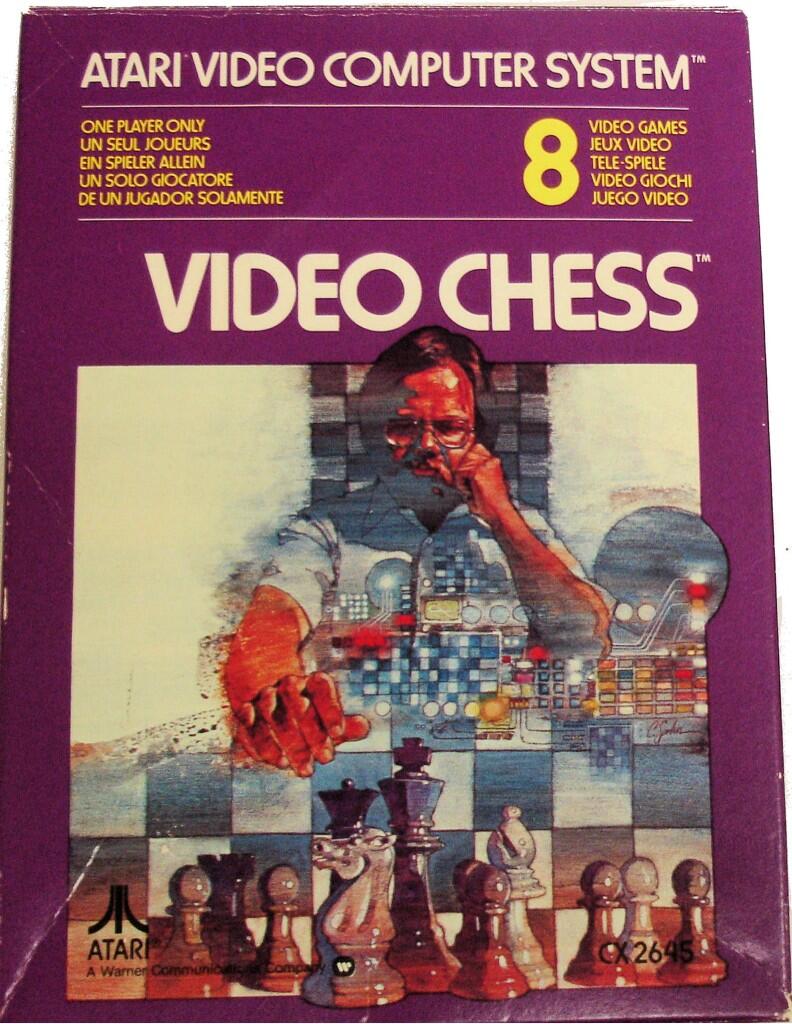
cool box art

Today I was wondering about how complex computers are, from the ground up. And how, just to make a simple chess game, there are procedures upon procedures.  To get the display down, and then all the rules, all the if/then/else statements.  

Then I thought of a funny idea:  a computer chess game that does not have any of the rules programmed into it.  Really, it's just a simulator of a chess board.  So, the players have to be the ones to remove pieces when they are taken, or to call check, or to make sure the other is moving the pieces appropriately.  There's something I really like about this.  I guess it plays on my expectations of what a computer-game of chess would be, what the computer will handle and what I have to do myself.  It's a world simulator, with a chess board in it.  

This train of thought sprung, fully formed while pondering my frustrations working with game making software.  In this case, it's Flixel that's giving me trouble.  This is the program that Sean Hogan and Jonathan Kittaka of Anodyne used, and I left that game saying to myself:  I wanna make a zelda clone too!  I still do.  But boy, I couldn't even get started with Flixel.  It's like my adult onset ADHD kicks in, and I can't seem to follow the instructions.  Or, look for new, better, updated instructions.  Every game design software I use is just too complex.

This is also frustrating because I'm not a complete stranger to the world of programming.  In High School, some fifty years ago.. wait, no.  fifteen years ago, I took a computer programming class.  I loved it!  We used a program called Pascal, which was text-based, and later, Delphi, which had a graphical component.  Pascal was great, most of the terminology was intuitive, and Delphi was just Pascal with graphics!  

So, the first thing I did, of course, was to produce an RPG.  Well, a battle game anyway.  It was fun.  There was a party of four, (whom I named after the members of the band Pearl Jam) and they battled miscellaneous enemies.  Bats, goblins, kobolds and the like.  I think the menu options were 'fight' or 'special' and each character had a different special move.  Double strike, attack all -- stuff like that.  And they could gain experience and raise levels.  pretty entertaining.  I really liked programming.

In college, we had to use C++, and we didn't even have computers in our lecture hall.  We had to do it all at home.  I hated C++, found it to be not intuitive at all.  Perhaps I was spoiled by Pascal.  I also was out of the house for the first time and prone to... distraction.  Anyway, I switched to an English major at the end of that year, and the rest is, as they say, history. 

So, is it folly to think I could get back into programming?  I can't tell.  But I do miss it.  Most especially, I miss creating systems, and interlacing them.  I never pursued graphics, but I was really happy to make the numbers move around in fun ways.  To give input and receive an output.  And to come up with an idea, and work out how to execute it.  It's a really cool frame of mind, programming.

Oh well. Whether or not I make a return to programming, you can be sure that I will write about it.  

hasta pasta,

-D

Saturday, March 30, 2013

Follow up: Sword and Sworcery EP


I recently completed this game, and decided to do a follow-up to my First Impressions.  I felt that the ending of this game was strongly affecting in a way that warranted further attention here.  

Sword and Sworcery EP is weird.  Weird and unique; truly this game is very much itself.  It doesn't really resemble anything else in my library or memory. Weird and beautiful: the sounds and graphics are finely crafted, original creations, custom to this game.  There's something so great about the impact of the sword swings during combat.  The sound has a real punch to it.

The themes are strange and perplexing.  The willingness to mix fantasy with random bits of modern imagery make it really hard to pin down.  However, playing through, from start to finish, this game has a sense of coherence.  This is actually aided somewhat by the habit of breaking of the fourth wall.  The characters speak directly to the player, and even the Scythian, the character controlled by the player, uses the royal 'we' whenever speaking.  It seemed clear to me that the Scythian did this to acknowledge the dual nature of the player and herself. The other characters will refer to the Scythian, but speak directly to you.  It feels as though they live in this game and acknowledge that there is a player outside the game.  

There is a theme of the inevitability of death, which is mentioned directly within the dialogue, and also through animated behavior.  This theme coupled with the breaking of the fourth wall, drew my attention to the fact that I was in no danger, however, I was taking part in putting the Scythian in danger.  And while the game never blamed me for it (as the player), I shared in a sense of dread and inevitability, as the Scythian carried out her 'woeful errand' with my assistance.  But more than that, I had an awareness that I was 'sharing' these feelings with the characters, who are merely pieces of fiction after all. 

As the game drew to a close, I felt my own connection to the characters drifting away.  I was left with a feeling of watching fish in a glass bowl.  The events of the story ultimately have a greater impact on the characters within, and I have  only second-hand involvement.  I will go on with my life, go to work, the grocery store, play another game.  But these events will have lasting effects on the characters within.  

I guess, in a sense, immersion is never really broken, but more put in its place.  The player is outside, and must remain there. We can only watch, and have a small influence on what happens within.  Which makes for a weird and beautiful experience.

So yeah, rad game.  I highly recommend it. Click the >Read More> link below for more info.


Saturday, June 9, 2012

First Impressions: VVVVVV


So, on this lovely, windy, Saturday morning, I decided to give VVVVVV a shot. Played for 45 mins. I was very pleased with what I found.
  1. Minimalism: this game has got it. Good Minimalism. For Example: 
  2. There are four buttons. Left, Right, Action, Menu. That is all. 
  3. It looks like something between an Atari 2600 game and an NES game, which I realize may be a wider field that I previously gave it credit for. 
  4. Level design. This game has got it! And it is informed by the minimalism. I am consistently stimulated by each screen. This game keeps me on my toes. The designers don't seem to have any trouble keeping it interesting within the limits they've set. 
  5. Fine touches. This game has a number of little, not terribly important things, that add depth to the game. I really appreciate it. 
  6. And it's got a kickin' soundtrack too! 


-D