Showing posts with label Story. Show all posts

Friday, August 22, 2014

What I've Learned from The Walking Dead: Season One (PC)


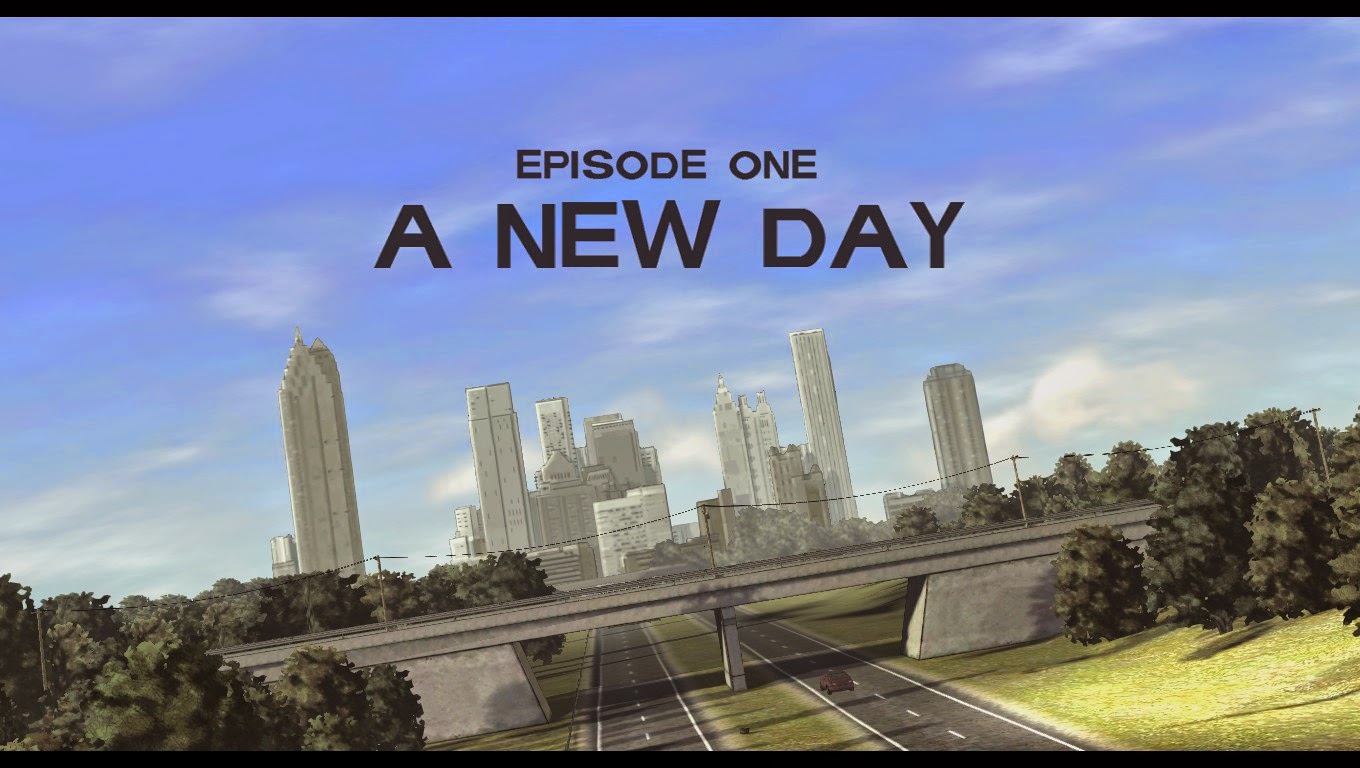
Let me first say that I love The Walking Dead franchise (comic, TV show and now video game) and the game is a great accompaniment to both the comic as well as the TV show.  While I have noticed some crossover with at least one character from the TV show and comic, I really hope that at some point a character from the game makes it into either the show or the comic.  I am now going to move away from gushing about how great this game is and how well the voice acting and art is, and instead talk about one of the main story telling aspects in the game.  The act of choosing how the story unfolds and your choices in that story.

The Walking Dead warns you upfront that the seemingly random and meaningless choices you make will affect the other characters in the story as well as the outcome of the game.  From what I could tell, the large story points are going to happen no matter what your choice is, but it is how the other characters react to your earlier choices is what I am trying to get across. 

In the game you play as native Georgian by the name of Lee who is charged with taking care of another survivor named Clementine.  Throughout the entirety of the game, which is comprised of five episodes told in roughly two hour increments, you play as Lee, making his decisions and sometimes influencing the choices and opinions of others. I was thankful that I was never asked to play as Clementine as I do not feel that my reactions to these situations would be accurate compared to that of an semi-orphaned eight year old girl during a zombie apocalypse.  Often times, text will pop up on the screen following a response you made that says "Clementine will remember that" or "Kenny will remember your loyalty."

It is these situations that make you start to really question your responses.  Add on top of that that most of your responses have to be made within a certain amount of time (decided by a varying speed decreasing timer-bar at the bottom of the screen).  There was a short time while playing that unless I saw that my response had some kind of impact on the other characters, I would be disappointed or felt that the situation did not really matter as to what my stance/response was.  I had become spoiled by the very game while I was playing that game.  These important choices are later shown to you at the end of the chapter and compare your choices to everyone else who has played the game.  

This is where I feel the game gets interesting.  I first heard about this aspect of the game from Gus Sorola on one of the Patch Podcasts (although I do not recall which specific episode) where he said that he likes finding out when his choices were not in the majority with what everyone else chose.  While I too am excited to find out that a choice I made was only made by 6% of other players, I am not going to tailor my playthrough with only this thought in mind.  Some choices I can guess what most other people have chosen, but pretty early on I was able to establish the kind of person I wanted to play Lee as being.  I would like to think that I was able to maintain his integrity throughout the entire game.  

There were two instances that I reloaded the game because the response I gave was not how I thought Lee was going to deliver the line.  In one instance, I yelled at Clementine to do something when I read the response as a calm suggestion.  This was only one of two times that I doubled back from a choice that I made.  The second time was when I thought I was backing up one character with a particular response, but ended up supporting someone else, so I reloaded.

What I have found to be great about this game is watching someone else play through, which is what I did with Conklederp after I had started playing.  However, what I quickly realized was that we made a lot of the same decisions, including the important story choices that showed up at the end of the chapter.  Out of the 26 possible choices that the game tallied, Conklederp and I differed in only seven instances.  70% similarity is fairly significant, at least I think so.

I would eventually like to share what my choices were, but that might have to be saved for a later time as everything would end up being a spoiler.  If you know about a key event coming up, that knowledge might lessen the emotional impact of having to make a decision within only a few seconds.  It could be the difference between saving one person instead of another or deciding who to trust and who could be detrimental to the survival of the group.  That will be a spoiler heavy post.

The Walking Dead contains three separate save files so I think I may decide to go through the game and make all the opposite choices that I made the first time through just to see how much the story differs, but I do  not think that my emotional stamina is up for it at this point.  Maybe after I finish The Walking Dead: Season Two, which I just started a few days ago.

I now leave you to have a wonderful weekend with a scene from happier, simpler times.


~JWfW/JDub/Jaconian

Saturday, June 7, 2014

Feminist Comic Primer

This is what a feminist comic looks like. Pretty cool, huh? 


Howdy folks,  I've decided to post here today entirely to refer you do a different post that I've been enjoying thoroughly.  Over at Comic Book Resources, writer Casey Gilly has compiled fifteen examples of feminist comics and there's a lot of intriguing stuff on this list.  Feminism is increasingly moving into the conversation about video games and other media, and it's not going away any time soon.  I've always loved a good, strong female character, so I welcome it.  

For those of you who get a headache whenever you hear the word 'feminism,'  I think you will be fine with this article.  She doesn't spend time on complex critical breakdown or apply the Bechdel Test to each item on the list.  Instead the writer includes a paragraph or two about the content of each comic book series,  many of which were written by men.   The titles span a range of styles, including coming of age stories, goofy summer camp stories to high fantasy action series and other mixtures and blends.  Gilly pays attention to strong female characters, and rich story content but doesn't hit you over the head with it.  

You can skip right to the list, or you can read Gilly's first page of writing where she summarizes her own relationship to feminism.  She isn't preachy or judgmental, but instead very personal.  She clearly loves comics, but can't ignore that most comics are aimed toward males, adolescent and adult, and a lot of the girl-oriented fare has been lackluster at best.  

I'm happy to say I'm familiar with a few titles from this list, including the Maxx, Death, Locas: The Maggie and Hopey Stories and Hark! A Vagrant.  Of the new (to me) titles, I'm very interested in checking out I Kill Giants, Anyas Ghost, Princeless, Rat Queens and Red Sonja.  And special points to Saga for having an image of a woman breast feeding with one hand and holding a gun in the other.  I've never seen that one before!  

I'll leave you with a few of the more intriguing covers- from which it is easier to judge a book, in the comic world.  


Lumberjanes


-D

Many thanks to Casey Gilly at Comic Resources for this great article.  And for JP Bruneau for referring me to it.    

Friday, November 8, 2013

Full Review: Gone Home (PC)


Gone Home is an story-based exploration game developed by The Fullbright Company based out of Portland, Oregon .  The story is set in a town/suburb near Portland (not that that matters, but it does pseudo-explain why it's raining the entire time when the game takes place in June) and takes place in 1995.  I feel that's all I can tell you without giving anything away.  I knew practically nothing about the game before going into it, aside from all that stuff about the game being developed using the HPL Engine and was planned as an Amnesia mod.  That along gives certain expectations as the Amnesia is a POV survival horror series.

If you do not want to know any spoilers about the game do not read further as I will be talking about certain aspects of the game which may very well contain spoilers.  So before I get down to it, I highly recommend playing the game before reading any further, unless of course you have no plans to play/experience this game.

~*CONTAINS SPOILERS*~

The story in Gone Home takes place in 1995 and I feel half of the game is reminiscing on that very fact.  While playing Conklederp asked me if the setting and amount of detail in the game for 1995 made me miss that time (I was 15 in 1995) and I said that while I didn't necessarily "miss it," seeing 1995 portrayed as Fullbright was showing us, it made me happy.

Samantha is the main character, whom we find out about through diary entries, notes between her and other students at the new school she is attending and teacher notes home.  All of the diary entries are read to the player by Sam, voiced by Sarah Grayson.  There is so much emotion and genuineness in her voice throughout the entire game that I cannot watch trailers or videos of the game with her voiceover and not have some kind of an emotional response.

The POV is through her older sister Katilin/Katie who has just returned from a year long trip around Europe, presumably shortly after graduation and she comes home to an empty house (that her family has moved to since she left for Europe, hence you the player not recognizing the "family home").  

The library we all wish we had growing up.
While exploring the house, you start finding items/notes/documents detailing your family's past, again presumably that the character of Katie may not have known, such as your father's failed book career from the 70's; his book career doesn't seem to be the hidden fact, only the fact that neither of his two books sold very well.  Or information that the house that the family moved into belonged to your pseudo-estranged uncle and was willed to your father after the uncle's death.  There are also hints that there's something wrong with the house, which you discover through diary entries from Sam and crumpled up notes found in trashcans.

When the game starts, you have access to both the bottom floor (with one door being locked) and the second floor.  Being who I am, I explored the ground floor first although I could have begun on the second floor, potentially "ruining (??)" the flow of the story.  Ah the story.  By starting on the ground floor, the story of your family begins in the 1970s with notes about your father's failed authoring career and how he lapses into alcoholism and an unfulfilling job of writing music equipment reviews.  You're then plunged into 1994, shortly after your family first moves into the new house and waves of nostalgia from the mid '90s flood your senses.
This, seriously, was what my Fridays looked like for most of the mid '90s.
There is so much that I can and want to say about Gone Home, but 1) There isn't enough "time" to give a play-by-play synopsis of everything that happened, and 2) The game is best experienced.  It really is like a 3 hour interactive movie of sorts, without any cut scenes.  There are no monsters to run away from, no jump scares or scare chords and only a few instances where you take a cassette and put it in a tape deck. You don't have to, but why wouldn't you?  The entire game is spent going from room-to-room, picking up slips of paper, receipts, notes from school, notebook entries, reading them and forming a picture about what has been happening with your family while you have been away.

Believe me when I say that you really feel like you know the family even before the game is over.  At one point, I turned to Conklederp and said something along the lines of "Jan [the mother] wouldn't do that, she's not like that at all. . ." and then realized I was talking about a person I had only read about for the last two hours.  I was very much emotionally invested in these people after only two hours.

Near the end of the game, I had this enormous pit in my stomach about how the game would end.  I didn't want what I thought what was going to happen, to happen.  I was emotionally afraid to find out "what happened."  I had been with this family for nearly three hours, seeing a family nearly torn apart by varying forces and start to bring itself back together and if what I feared were to have happened, I have no shame in saying that I think I might've lost it.

Instead, the "climax" happened and I had this immense wave of happiness, joy and relief wash over me.  I can't even compare what it would be like as I know that any analogy I used would include something about how the game actually ended and I would at least like to keep that partly a surprise.

The only way I know how to end this post, is that Gone Home is a beautifully composed experience wrapped inside of a video game.

~JWfW/JDub/Jaconian
Instrumental

Tuesday, February 19, 2013

Full Review: The World Ends With You (DS) / Part I: Story & Game Mechanics

So I finally got around to it, hunkered down and finished The World Ends With You, which I've been playing for a good number of months now.  I've also been looking forward to composing this "Full Review."  However, during the last couple of days (both in-game and real life), I'd been feeling that a single post for this game would either not do the game itself justice, or it would become unwieldy and long, so I've decided to break the review up into the following parts:
I: The Story & Game Mechanics
II: The Music

I don't know what it has about writing this review, but it has taken me multiple starts over the course of a couple of weeks.  A large part is that the game did so well and that so much has already been written about the game that I didn't just want to be a rehash of the 265 million other articles out there.  At the same time, I knew that I had not discovered something brand new about this six year old game. So once I got beyond my own insecurities, I finally managed to complete the following posts.

I would also like to point out that at the very least, Part I will contain SPOILERS since I feel talking about the story in the game would be incomplete and I feel like I wouldn't be able to write it as effectively without bringing up at least a couple of SPOILERS.  This review will contain SPOILERS.  Now that that's out of the way. . .


The story. . . the story. . . {SPOILER} is a pretty dark one.  It revolves around a group of people who find themselves in a game put on by some supernatural organization calling themselves the Reapers where they take recently dead people and have them play for a second chance at life.  It may be that the people involved in the game had to have died in Shibuya, the area of Japan that the game takes place, I'm not sure.  Throughout the game, you're trying to figure out a number of things, one of those being who killed you, Neku, and how to survive the game.

Along the way, you meet up, and team up with various characters who all have varying degrees of personal issues.  There's the girl who doesn't like how she sees herself (who may have died from comitting suicide), there's the brother who didn't see his life going anywhere and along with his sister, die in a car accident, and a "boy" who turns out is the whole reason why you're there.

The game initially starts out like a typical Japanese RPG in that there's some confusion, then it's fighting monsters to "level up" and trying to "save the world," or in this case, saving your life.  As the game progresses, it becomes apparent that there's more to it than pseudo-cliche's in the form of characters.  For me, it was about the time you find out that your character, Neku is dead, along with everyone else, and that Shiki (the bubbly hyper-attractive girl) only looks the way she does is because she really liked the way she looked despite coveting another girl's appearance while she was alive.  It's a little more complicated than that, but that's the point of playing the game, or even reading a book, to find out for yourself and experience that great Keanu Reeves' "whoa" feeling.

There's a B-Story aspect too that I didn't explore too much.  In the game it's called "Tin Pin Slammer" and it's also the way that two people who own physical copies of TWEWY can "fight" each other.  The basic point is to knock the other players' Pins off a board by sliding them into each other.  Each Pin has a weight and a number of special attacks.  There was only one or two required Tin Pin Slammer battles that were required to progress the storyline, and I think that's all I really did.  Maybe I just need to play against human players.  Or not.

I talked a bit about how the battles are run in my Initial Review so I won't talk too much about how I button mash with the top character.  That tactic held true for the next two partners that join up with Neku, although with Beat, your third partner, his way of attacking was so initially difficult and confusing that I had to hand over his controls to the computer.  Only half way through Act III did I start taking control of Beat when I felt that I could do as good a job or better than the computer.  And that I wouldn't be killing myself by screwing up with Beat (both characters' life meters are connected so Beat could totally fuck things up while Neko remains untouched and you will still die).

While doing background for this article, I also discovered something new about the combat system that I did not know about while playing through the game.  With each of Neku's companions, if they complete/earn a certain number of Combo Stars, it allows them to perform a combo attack with Neku.  If you earn another combo attack before using the first earned combo, you get a level 2 combo which does a lot more damage.  This I thought was the max as I never seemed to earn anything beyond it.  Turns out you can earn a level 3 combo attack.  Huh.  Ah well, I still managed to defeat the final boss.

Let's talk about the Pins now.  The Pins are akin to Pokemon.  They're out there in the world, you want to collect them, level them up and everyone has their favorites.  They're what you use to cause damage or modify other Pins during combat.  Now the game has some pretty ingenious ways to level up your Pins and to gain experience.

  1. Earn experience by defeating enemies
  2. When you have the game turned off (not just closing the DS), you will earn experience for the amount of time you're away from the game.  I don't know the exact numbers, but it's something like Day 1: 144 ; Day 2: 100 ; Day 3: 70 and so on.
  3. While the game is still running, but you're not playing, you can set the game to "Mingle" while enables you to "interact" with other WiFi signals, people playing other DS games, or people playing TWEWY.  You can "interact" with up to 10 signals before you have to accept those signals which are converted into exp and you have to re-select Mingle again.
Now, obviously, earning exp from enemies, in my opinion, is the best way to level up Pins.  The reason is that about half way through the game, you have 6 Pins to use during combat and they all have to have different ways to activate as the game will tell you that you can't equip two Pins that say, have you 'slash vertically on the noise.'  So you have 6 Pins, all with different effects and ways to execute their abilities.  That takes a bit of practice and memorization, especially when one Pin's abilities are recharging and you have five others to choose from.  

Options 2 and 3 for earning Pin experience are really only a good way to go if you have Pins that you have no interest in using and only want to level them up to complete your collection.  I can recall there only being a couple of Pins that I didn't like using, but felt dedicated enough to level them up to full.

At the moment, I think this about covers it.  I know, I know.  I didn't develop my thesis and my citations were a bit lacking.  And, I ended the first sentence of this paragraph with a pronoun.  I also feel that this review could go on a lot longer so I just need to nip it in the bud.  Part II: Music will be up this next Friday and while I can't promise that it will be a shorter length, I can promise that there will be music.

~JWfW/JDub/Jaconian
I Should've Just Given Her A Name