Showing posts with label dreams. Show all posts

Wednesday, April 9, 2014

The Classic Episodes (TV Review)

Any good show has a shortlist of classic episodes.  The ones that stand up above the rest.  In some cases, these might be the ones that you would show to an uninitiated person, who would like to know what this show is all about.  And because I love lists as much as the next guy, I'm going to pick one episode from a few TV series I've watched.

While it's generally best to watch a show in chronological order, so you can see the characters develop, there are usually episodes in the run of a series that are self-contained, and little to no background is required to enjoy them.  These are the ones I'd like to focus on.  In each case, there are others that might do just as good a job, but these are my picks.  


http://www.redbubble.com/people/dangerousdays/works/9026099-darmok-and-jalad-at-tanagra


Star Trek: The Next Generation
Darmok

Star Trek: The Next Generation has the advantage of having many self-contained episodes and few multi-episode spanning story arcs.  This makes the show easy to pick up and enjoy.  But when I think of the series, Darmok is usually the first episode I think of.

The execution of the theme is original, and totally what Star Trek is all about.  This story is fully diplomatic, it's just a matter of learning to communicate.  On one side is hand-to-hand combat with a shiny beast, and also stories around the campfire.  On the other side is... well, research.  Half this episode is just characters researching language, stories, and discussing their findings.

All you need know is the barest information about what the Federation is, and how they operate.  And not necessarily even that.


Buffy the Vampire Slayer
Restless

Now, I haven' gotten through the whole series, so maybe this will change, but I just saw the Dream episode of Buffy, and it was a really well done episode.  About 80% of the action in the episode takes place within four different dreams.  I loved the strangeness of it; I felt like it was not just a Hollywood version of what dreams are, but a much more realistic one.  One key detail is the way that the dreamers take the strangeness in stride, the way I've found I tend to do in my own dreams.

Information about the characters might help this episode, but it's true value is in the direction and cinematography, which can be appreciated on their own merits.


Doctor Who
Blink

This is one of those episodes.  It's self contained, well designed, really a fantastic episode.  Frankly, it's such a good episode that it might even spoil the series a little.  This is definitely the first episode I show anyone who is curious about Dr. Who.  Even if they don't end up liking the series, they will more than likely enjoy this episode.  It is well-executed, original and completely self contained.  The lead roles are one-off characters.  Outsiders, like the first time viewers, unfamiliar with the series they inhabit. 


Saturday, March 1, 2014

First Impressions: Starseed Pilgrim


Starseed Pilgrim just ate two hours of my day.  I knew I had been at it a while, but I was surprised to read the total.  I'd been saying 'just one more game' to myself for the last ten games or so.  The first half of the time was spent figuring out what is going on.  And then when I started to figure it out, I've tried to determine how to build skill.   I'm definitely getting better at it, but I feel like there's still more to learn.

This game taps into a sense of creativity, of mystery, of exploration and of expertise.  And Harmony, don't forget harmony.  The visual and audio design is already invading my dreams.  Starseed Pilgrim is another in a very exciting trend in gaming which uses sound effects in a musical and atmospheric way.  Every action produces a tone, and they combine in a musical soundscape of the game.  Similar uses of music include Everyday Shooter, Bit.Trip.Runner and Proteus.

Starseed Pilgrim is one of those games that I want to take care not to share too much.  Part of the fun and excitement has been just figuring out how to play.  I recommend mapping a gamepad using JoyToKey, and then having a good time.

That's all I'll say for now.  I'll write a full review after this game lets go of my brain.  It will be full of spoilers.

-D

P.S.  I suppose I should mention one more thing:  this game is TOUGH.

Wednesday, February 5, 2014

Tetris Dreams part II

This is an old post I started a few months back when I was playing the first Final Fantasy.  I decided to return to the post, and I think I found something worth fleshing out.  I often use this phrase:  'as I'm riding the American River Bike Trail', which is where I often come up with video game ideas.  I like to imagine dynamic systems of life in terms of video games, and riding that bike trail tends to bring them to mind.  I enjoy doing this.  It's sort of like Tetris Dreams.  


The Iconic Fighter Guy

"Tetris Dreams" is a phrase I have heard a bunch.  Lately I've noticed that I get daydreams about different games.  Especially those with a simple interface.  For example:  I'm playing FF1 right now, and I'm sort of dreaming about it.  Stray thoughts at work, zoning out doing data entry, and I see the battle screen.  And the iconic fighter guy.  The others are there too, but he's the easiest to pick out.  It's sort of floating in the distance.   

Bagging groceries is like Tetris, kind of.  More complex, actually.  Because there is shape, weight and surface tension.  In Tetris, it's just shape.  I mention this because I've been bagging groceries at the local food co-op as means to keep me occupied and earn a discount on groceries. 

I think that some video game day dreams come from staring at the same screen for long enough.  Thats' why Tetris lends itself so easily, because of the simple patterns and repetition.  However, it may be more than that.  The images from Tetris or Final Fantasy may come easily because of their simplicity, but there are other video game daydreams that I have, which are based on mechanics instead of graphics.

Tony Hawk is the prime example.  After dumping countless hours Tony Hawk's Pro Skater 2, I couldn't ride in a car without imagining myself grinding on every available edge, doing kickflips as I hop from edge to edge.  It's tons of fun, and oftentimes I imagined the car itself doing these tricks.  Come to think of it, when really bored riding in a car, I used to imagine Mario (from the first game) running alongside the car, jumping over the fences, buildings and other obstacles along the side of the road.  It seems that there is something triggering about moving along the road at an even pace, watching the scenery go by.  


In further support of the connection between motion and video game dreams, a lot of my little video game ideas come when I am riding my bicycle, or riding the train.  In fact, when I used to commute by train, I would stare out the window at the Yolo causeway and imagine wandering around exploring.  Watching the seasons change and the effect it had on the plant life made me want to develop a game that had this sort of dynamic scenery.  It was very peaceful.  Around that time I discovered Proteus, which did a very similar thing to what I was imagining. Of course, I wanted to stick the environment into an RPG, because that is probably my favorite video game genre.

When it comes to RPGs, I often day dream about player statistics.  Levels, experience, strength, durability, attack damage and so on and so forth.  I imagine my experiences playing RPGs in my youth have become such a part of me, that the process of balancing equations in order to achieve in-game actions is just a part of me.  I enjoy pondering human systems in terms of RPG status sheets, hunger, thirst, tiredness, allergies, illness.  In the end, it's just tossing dice and applying meaning to the results.  Which is a great deal of fun.


-D


Wednesday, April 24, 2013

Tetris Dreams

http://perfectzed.deviantart.com/art/Tetris-wallpaper-152596878


Tetris Dreams:
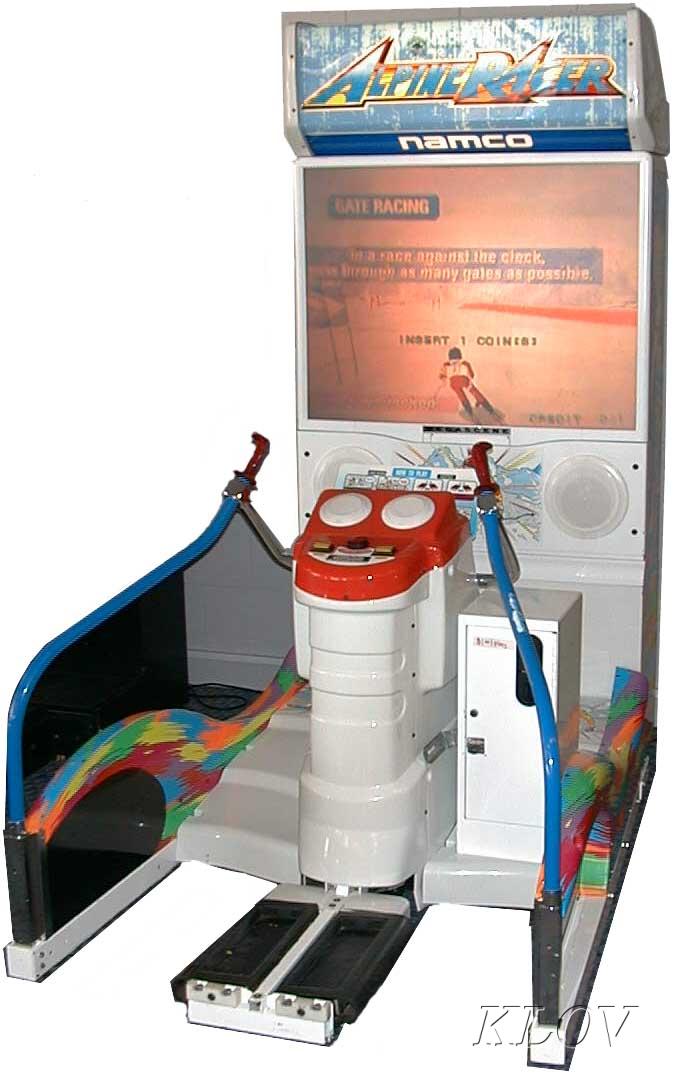
well holy shit, there has actually been a scientific study on Tetris Dreams.  It was featured on an episode of RadioLab about Dreams.  And it's in the first ten minutes, so you should go over and listen.  Later they play a full-body arcade version of alpine racer.

http://www.radiolab.org/2007/may/24/dreams/


Just a post-fragment for ya'll here at 6:45am
-D
Currently Playing:  Ultima: Quest for Avatar (NES), Final Fantasy II (NES)

Friday, June 1, 2012

The Legend of Zelda - Graphics and Exploration


Click on an image for a larger version
I think Zelda 1 is my favorite game of all time.  The reason for this is that I can very easily daydream myself into the world of Zelda 1.  All I have to do is take a breath, and Zelda 1 appears in my mind.  And it's always in a nice, dream-state, imprecise version of it.  It's like I can *smell* Zelda 1.  The visual representation appears the strongest, the colors and the general shape of the game, which are both very distinctive.  I'm going to try to describe and analyze what it is about Zelda 1 that makes it so distinct.  *I would also like to note that this post was not inspired by Jack's Memory Post - it was serendipity that we were both thinking at the same time, about the same phenomenon; of being transported into a game memory. 

There are some clear contributing factors to how easily I can imagine the Zelda world.  I played it when I was very young, and highly impressionable.  I played it a LOT.  But, in addition to these things, it is also a great game.  And it is on that fact that I wish to focus.  Yes, Zelda has been done before, but that's what makes it a great trial run for game analysis, that is, for game analysis on a good game.  The Legend of Zelda has a very distinct and consistent aesthetic, and it is an open-world exploration game.  I think these are the components which make the game particularly engaging.

Today I want to focus on the overworld map.  Particularly about the sense of exploration and how the visual style helps to facilitate that sense of exploration.  The game is viewed from top-down, and is divided by screens.  So when I enter a screen, I can see everything in the screen that I can affect or can affect me.  The game map in Zelda is essentially a series of rectangular pictures of screen size, positioned side by side and top to bottom to form a larger rectangle. I can only view one picture at a time, and I can move freely within the picture I presently inhabit.  Passing between screens is an important part of the game, allowing me to run for safety if danger lurks in my present screen.  The transition between screens is, for everyone who plays the game, a signature part of the visual aesthetic.


Each screen is made up by mostly tile-based images.  Bushes, Rocks, and Enemies all fit within small 16 x 16 pixel squares, as do all hearts, rupees and items (I discovered these dimensions when playing Mario Paint for the Super NES).  This consistent size and use of simple, primary colors creates a simplistic design that might be called minimalist.  There were never any real surprises, in a given screen, but there were always different arrangements of the small number of tiles.  The simplicity and limitations allow for everything to be placed purposefully, the consistency makes it so that the player is never pulled out of the game by bad design.

A great deal of my time playing Zelda has been spent wandering the map.  Just kind of looking around.  Early on in the game, it's pretty tough, because the enemy is tough, and Link is weak.  But after gaining a few more heart containers and a few more weapons, the world begins to open up.  Enemies and combat represent obstacles to be overcome, you have to earn each new screen you explore.  Because the games graphical consistencies, I can size up a screen in an instant. I really want to look around in that forest area, but is crawling with Moblins.  I'll stick to the Octorocks on the beach.Or I'd love to check out death mountain, but all those Centaur guys make that really tough to do.  It's fun to look around just for the sake of looking around, but if that's not enough, there's also a large number of hidden goodies to find.

It is possible to know this game completely; to literally leave no stone unturned.  No wall un-bombed, no bush unburned.  Jack points out that there was no visual cue as to when a bush was burnable or a wall was bomb-able.  You just had to give it a try an hope for the best.This method is was out of vogue by the time Zelda III came out, but I don't think it was necessarily a bad mechanic (Though it would have been nice to have gotten the red candle just a little earlier in the game -ed).  With no visual cue, I would burn every bush, but I would start with the ones that I thought made aesthetic sense, as though I could figure out and understand the programmer's visual style and thus, save myself time in the never-ending search for a new cave.  I felt more of a sense of exploration, knowing that I just might find something, and sometimes did find hidden caves that were secrets to everybody.