Showing posts with label game maker. Show all posts

Wednesday, March 12, 2014

First Impressions: Zelda Classic

Picture lifted from 'It's Dangerous to Go Alone' kickstarter - look it up!

Zelda Classic is a game editor for the Legend of Zelda.  Yes, just like I always wanted.  I had heard of it, and unsuccessfully tried to make it work, wrote it off as bunk.  I just revisited it, this time with success, and I am thrilled to report that this is for real.  Just like I always wanted.

I had occasion to return to this game when a stumbled onto a posting at The Indie Game Source extolling the virtues of Zelda Classic.  This post pretty well expresses much of the enthusiasm I feel at the prospect of fan-made Zelda games in the NES and SNES style.  The links in the above article are all broken, but you can find them again by searching the Zelda Classic archives.  

But actually, I didn't particularly care for the two games I tried from the above article.  One thing I've noticed about some of these quest designs is that they tend to come big and kind of overblown.  In making my own quests, I want to start small, concentrate on making a fun game, and not an epic journey.  

There is a thriving community of Zelda Classic fans, players and designers over at purezc.net.  I've just signed up for the forums, and so far have been well received in the community.  I was looking for a Classic style game (I'm not really interested in the 16-bit style right now) and I was pointed to a forum contributer who goes by Moosh.  I tried out his game "Tale of St. Christoph" and so far I really like it! 

There's so much potential in Zelda Classic, I'm very excited.  The way I see it is that The Legend Of Zelda was such a great game, that it can be remixed time and again, and still be fun.  I'm so glad there is a tool available for the common person to do this.  

So far, I've made a small map, which was fun and simple to do and easy to get carried away with.  Now I'm working on dungeons, and getting the caves to go to the dungeons- and I got stuck there.  I'm following a guide, but it's still tough.  But when I've learned a few basic tricks, I'll turn out a couple quests.  

Essential Links:  (hehe, links)  

Zelda Classic

The official website.  Download the programs here - The editor is called ZQuest and the player is called Zelda-w  (this is important, because if you make the same mistake I did, you'll try to play the games with the editor.  No.  It's for editing)

Zelda Classic User Guide

Zelda Classic isn't particularly intuitive; a guide is definitely necessary.

PureZC.net

Search the Quest Database at PureZC.net to find a quest to play.  I recommend choosing 'mini quests' using the genre menu on the right side.  
This... could...be... awesome!

-D

Wednesday, November 27, 2013

Game Design Idea: Narrative Walk Through : Statement of Purpose


So, as I mentioned before, I can't seem to crack into any of the supposed game design software I've seen on the internet and read in reviews and even have seen attributed to games that I like (Anodyne).  Yet, my mind persists in imagining what it would be like to design a game.  And I think this stuff makes for a great game design idea!

For example, I think it would be great to design a game, where the levels progress with programming milestones.   Like, the first screen is just a crappy looking block guy, moving around -- success!  Then the next screen maybe you can slash a sword!  And then by the third screen, maybe you can cut down a bush! Hooray!  Then there's an enemy.   And then, by then you might have the hang of it enough to have like, a whole series of screens, with a treasure box at the end, hooray!  

I imagine a narrator the whole time, describing the process of creation to the little character on screen.  The challenges, and progressions.  Creating a weird meta-fiction author dynamic.  Did I mention I love meta-fiction?  I've noticed this stuff is pretty big these days as well, with games like Thomas was Alone and the Stanley Parable Demo.  Also, with the regular use of the term 'meta' to describe things.  But being a fancy English major, I've been familiar with the term for some time.  

Specifically, I was introduced to meta-fiction with the book 'At Swim Two Birds' by Flann O'Brien (pen name Brian O'Nolan - meta!) .  It's a book about a guy who's writing a book.  Meta level 1.  Then the characters in that book decide they don't like what's going on in their story,  Meta Level 2, and they go to to the authors house to talk some sense into him.  Or some such thing.  It's a lot of fun, and very old, published in 1939.    

Further Meta ideas come from the 'fourth wall' concept in theater, whereas the actors aren't supposed to acknowledge the audience, and when they do so, they're breaking the 'fourth wall.'   I've always loved to play with that, though.

Of course, my idea of a video game about its own creation is silly for a couple reasons.  One is that I still don't actually know what the process is like.  I'm just guessing.  And whenever I read interviews with game creators, they always describe all sorts of things they weren't expecting.  So I expect that would happen to me too.  Expecting the unexpected, I'm so ready!

Anyway, I think the process would be to work on different concepts, enemies, items, procedures, etc.  And make careful note when something interesting happens.  Then, when I've got the hang of the whole programming thing, go back and fake it.  There's no need for my authentic practice screens to be in a game, just something resembling them.  Throw a kookie narrator with a british accent on the thing, and I'm set!  

Man, I love my own ideas!  And it's so much easier to write about them than to actually push them through my metaphorical loins, spank breath into them, cut their metaphorical umbilical chord, hold them close and feed them from my metaphorical teat!  I'm unemployed, and *still* that sounds like too much trouble!  Maybe it's the way I described it...  Actually, wait, this reminds me of the conclusion of the play "Slag" that I saw in college.  My girlfriend was one of the three principle actresses, and her character gets miraculously pregnant, but her character was insane, and it was actually just a food baby.  (Oh man, I am *such* an English Major.)

Anyway, I realize I spoiled the ending for you, which is a high crime, but don't worry - the enjoyment of that play came from the performances.  Three fantastic Actresses with really great chemistry.  The plot wasn't really very important, and I saw it more than once, I think.  It was performances like that that gave me a love of the theater.  And has subsequently fueled my curiosity about the connection between theater, film and video games.  Specifically around minimalism - I love how fantastic some performances are with minimal set design.  I can't help but wonder if a similar elegance can be applied to game design, programming and execution.


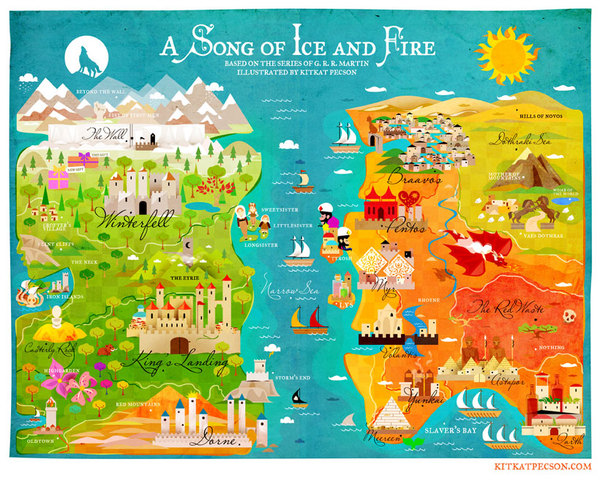
http://www.andysowards.com/blog/2012/70-epic-map-design/

When I was young, I wanted to create epic fantasy.  Nothing but.  Alright, maybe an occasional side-scroller.  But, the biggest piece of my creative pie was taken up with 50+ hour Role Playing Games.  And the reflexive version:  novelizations of already existing RPGs.  High Fantasy, Tolkein and Dungeons and Dragons ruled all.  And the bigger, longer and more epic, the better. It is still like a security blanket or a favorite stuffed toy.  I can go back there just by closing my eyes and relaxing.

However, in these days following the Box Office and Academy Award domination of the Lord of the Rings movie Trilogy,  it seems pretty damned clear to me that the High Fantasy World is covered.  You can't throw a stone without hitting a two to three hour epic something.  I missed riding that wave, and now I'm wonder when it will subside.  

These days, I am most interested in minimalism, in peeling back all of the glitz and the glamour and the huge set pieces, to find out what's in the core of genre, theater, creativity.  I want to take a chisel to the edifice of the modern High Fantasy Blockbuster and see if there isn't something beautiful underneath it all.  I believe that minimalism is more raw, and prompts the viewer to fill in the gaps with their own imagination.  More than that, it is much, much more inexpensive to produce.  And therefore can be done with a smaller team, which allows for much more creative control and input by the principle few.  And that serves my starving little creative ego, I think.  

Hmm, caffienne high is faltering.  love of my own ideas is waning.  autumn is passing into winter.  power down. boooooooop.  

-D


P.S. follow-up question:  does this need to be published?  Our blog quality standards aren't like, super-high or anything, yet I have a bunch of ideas that are important to me here, and I could maybe turn them into something real.  But if that's the case, what does it matter if I publish now or later?

P.P.S.  Mine the brainy gamer for theater-game connection.  I think he's really into that.

P.P.P.S  Interdisciplinary study called 'Performance Studies' at UCD, Berkeley.  Looks pretty darn close to what I'm looking at

P.P.P.P.S Adaptation and American Movie are both examples of movies about the making of movies.  Adaptation with much more creative license - and a big favorite of mine!

P.P.P.P.P.S. I think I'll just keep all these post-scripts.  Why not?  I'm feeling silly.  Also, I heard that there was a game that progresses through the history of RPGs.  That's sort of what I'm talking about, but not the same thing.


Saturday, November 23, 2013

Stressing The Right Moves


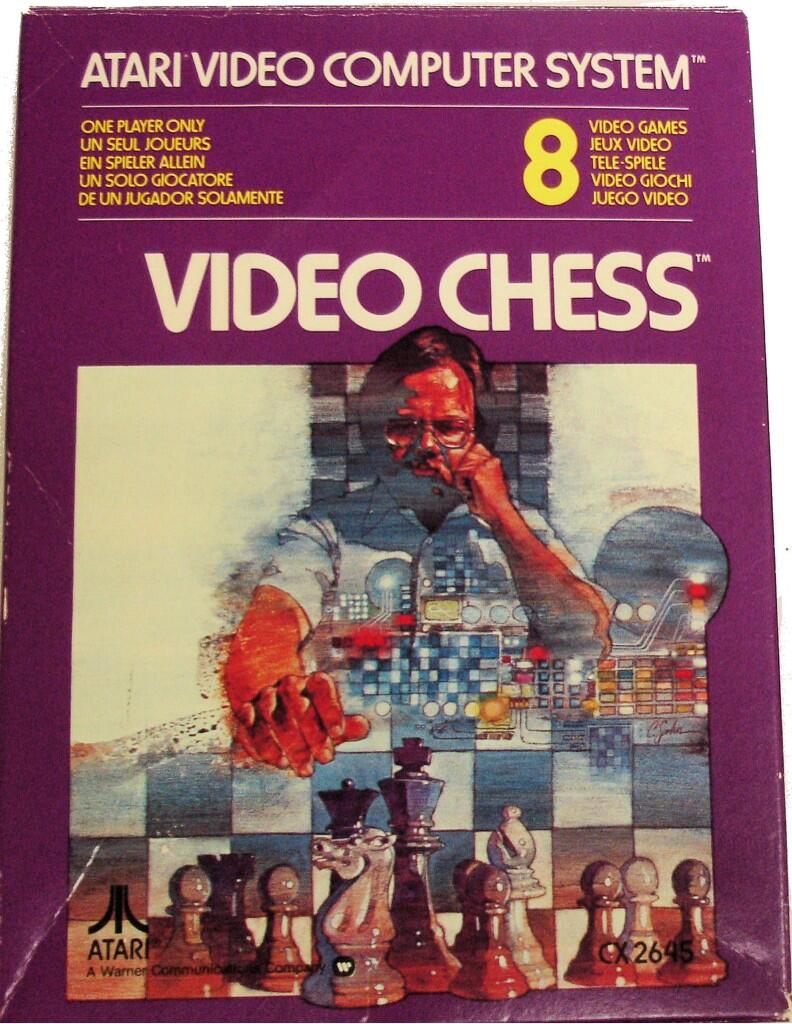
cool box art

Today I was wondering about how complex computers are, from the ground up. And how, just to make a simple chess game, there are procedures upon procedures.  To get the display down, and then all the rules, all the if/then/else statements.  

Then I thought of a funny idea:  a computer chess game that does not have any of the rules programmed into it.  Really, it's just a simulator of a chess board.  So, the players have to be the ones to remove pieces when they are taken, or to call check, or to make sure the other is moving the pieces appropriately.  There's something I really like about this.  I guess it plays on my expectations of what a computer-game of chess would be, what the computer will handle and what I have to do myself.  It's a world simulator, with a chess board in it.  

This train of thought sprung, fully formed while pondering my frustrations working with game making software.  In this case, it's Flixel that's giving me trouble.  This is the program that Sean Hogan and Jonathan Kittaka of Anodyne used, and I left that game saying to myself:  I wanna make a zelda clone too!  I still do.  But boy, I couldn't even get started with Flixel.  It's like my adult onset ADHD kicks in, and I can't seem to follow the instructions.  Or, look for new, better, updated instructions.  Every game design software I use is just too complex.

This is also frustrating because I'm not a complete stranger to the world of programming.  In High School, some fifty years ago.. wait, no.  fifteen years ago, I took a computer programming class.  I loved it!  We used a program called Pascal, which was text-based, and later, Delphi, which had a graphical component.  Pascal was great, most of the terminology was intuitive, and Delphi was just Pascal with graphics!  

So, the first thing I did, of course, was to produce an RPG.  Well, a battle game anyway.  It was fun.  There was a party of four, (whom I named after the members of the band Pearl Jam) and they battled miscellaneous enemies.  Bats, goblins, kobolds and the like.  I think the menu options were 'fight' or 'special' and each character had a different special move.  Double strike, attack all -- stuff like that.  And they could gain experience and raise levels.  pretty entertaining.  I really liked programming.

In college, we had to use C++, and we didn't even have computers in our lecture hall.  We had to do it all at home.  I hated C++, found it to be not intuitive at all.  Perhaps I was spoiled by Pascal.  I also was out of the house for the first time and prone to... distraction.  Anyway, I switched to an English major at the end of that year, and the rest is, as they say, history. 

So, is it folly to think I could get back into programming?  I can't tell.  But I do miss it.  Most especially, I miss creating systems, and interlacing them.  I never pursued graphics, but I was really happy to make the numbers move around in fun ways.  To give input and receive an output.  And to come up with an idea, and work out how to execute it.  It's a really cool frame of mind, programming.

Oh well. Whether or not I make a return to programming, you can be sure that I will write about it.  

hasta pasta,

-D

Saturday, May 11, 2013

Miscellaneous Links

I've been collecting links for a while now, and they're piling up.  I'm going to run through a few of them, so that you, dear reader, may benefit from the delights they contain.

Featured Game: Jumpman


http://runhello.com/
This is a site of a creative fellow with lots of projects.  The most immediately interesting being jumpman (a free game for download, see the video above).  It is my intention to go back and check out his other projects.  


Game-creator resources:
http://www.pixelprospector.com/the-big-list-of-game-making-tools/
The big list of game making tools.  self explanatory.  One of the best things this page has is links to examples of games made with each featured game making tool.  Some I've played or heard of before, and others look cool.


http://youcanmakevideogames.com/
Another self-explanatory link along the same theme.


http://www.diygamer.com/
DIY gamer.  Great website, I may have linked to it before, but it bears repeating.  This stuff is truly DIY, from stuff that you or I could put out, to other things that take serious work and talent.  I guess I'm mostly trying to convince myself to hunker down and make a game.  I guess.  


Free Flash Games:
http://www.lorenbednar.com/Excitement/
Excitement.  Neat Atari arcade style game.  very simple, nice graphics.  The controls are pretty loose.  With some tightening, this could be a really addictive game.  plays in-browser.

http://var.i.brainworth.net/main.html?level=introduction_to_actions_moveforward
Var and the Vikings. A game where the whole purpose is to program character AI.  Start with teaching them to move forward.  Then to jump, then to do both.  If this sounds interesting, give the demo a look.  Plays like a puzzle game.  plays in-browser.

http://thotep-7dfps.s3.amazonaws.com/index.htm
Modern shooter.  A wild west shooting game that has entirely keyboard inputs.  This game is a rush-job, but it is worth a taste.  Plays in-browser.


Gaming Editorials:
http://www.gamasutra.com/view/feature/130063/game_design_essentials_20_.php?page=1
Article listing the top 20 hard video games.  Lots of old games here, you might see some favorites.  The purpose of the article is to examine game design choices through the difficulty of these games.  


http://www.brainygamer.com/the_brainy_gamer/2012/09/index.html
The brainy gamer is my new favorite video game journalist.  Here he uses a bread metaphor to talk about the idea of the 'mother dough' as applied for video games.  Example:  Donkey Kong laid the groundwork for basically the whole platforming genre.  Wolfenstein 3d - the FPS.  But what did these games take from even earlier games? 


http://indiegames.com/2012/12/top_10_indie_games_of_2012_2.html
Indie games weblog does top 10 indie games of 2012.  A bunch of them are paid games, but I should take a look at the free ones.

http://zeboyd.com/2013/01/31/a-better-classification-system-for-rpgs/
Guys at zeboyd games discuss genre classification for RPGs.  I like this subject.  Some of the comments are good too.

http://www.indiegamemag.com
Indie Games Magazine.  This is a nice little site.  I actually discovered it when I was searching through the Google Play Store on my phone, looking for indie game information.  This is the only publication that came up.  So, while there is a website, I primarily browse Indie Games Magazine on my phone.  I enjoy being able to disappear into the world of game journalism while away from home.  Which reminds me...


Rambling, why doesn't this guy shut up?
Surely by now, you've heard that Valve is releasing a home console called the Piston, or Steam Box.  Which is all fine and dandy, even downright neat.  I encourage others to get into the console world, shake up those console wars a bit.  Ouya is another neat new console-thing that is happening. (both are designed as tiny cubes- huh.    Anyhow, I realized the other day that what I really want is to be able to play my steam games while on the go.  Away from my home PC.  

I don't even own a TV, so console systems all come with the price of a TV attached to them.  I may get one some time, but for the time being, my PC serves as my all-in-one machine.  Except when I'm on the go.  Then my crappy Android phone or my outdated Nintendo DS have to suffice.  I would like a powerful portable gaming PC.  Is this possible?  No, I don't want a laptop, I want something to compete against the 3DS and PSP.   Hell, I would buy one of those systems if you told me I could access my steam library on it.  I've heard nothing to this effect, but then again, I am generally out of touch.  Moving on. 

Oh, wait, I'm done?  Yep, all done.  Enjoy the links :)

-D


Wednesday, April 17, 2013

BBC indie game podcast and the best indie games of 2011


If you're like me, then you may be perpetually out-of-touch with what's going on right now in gaming.  I recently went to a game stop, and I kept repeating 'Another God of War?'  'Another Bioshock?' 'didn't these games just come out?'  And if you're like me, you probably don't really mind being out of touch.  

Yet another similarity you may have to me is that you may enjoy listening to podcasts,  perhaps while in the kitchen, cooking or washing dishes.  I have a few podcasts that I cycle through; I've always got something to listen to.  However, sometimes I get bored of the same old subjects, and I go out to find something new.  My latest search was for indie game podcasts.

To my disappointment, the first few podcasts I found had not been updated in months or even years.  This seemed odd, given that I think indie games are becoming a bigger part of the entertainment discussion, not smaller.  But, then again, as I mentioned, I am perpetually out-of-touch. I decided to give one a go, and I settled on the BBC-sponsored:  99 coins podcast (not updated since July, 2012).  

I started with the latest episode, titled 'anyone can make a game.'  This is just the kind of sentiment I was looking for.  What I found was a rambling discussion of game-making tools and what an 'indie game' really is.  Nice overall tone, a little hard to catch the details sometimes.  However, the writings and programs they reference in the episode are included in the links. 

The second episode I listened to was 'favourite indie games of 2011.'  I found that this was just my speed.  If being out-of-touch can be quantified, then I guess I'm about a year and half behind the indie gaming scene.  They list of several interesting titles, and even a couple I know of: Minecraft, SpaceChem, Sword and Sworcery EP along with many other interesting titles.

One game referenced is johan sebastian joust.  A game I may never play, but does look like fun.
http://www.jsjoust.com/

Another is the Stanley Parable, a game I almost played once.  I'm going to give this another try.    -D
http://www.moddb.com/mods/the-stanley-parable


-D

Saturday, January 26, 2013

Weekend Link Dump


Indies guide to game making
This is a great, informative and compact article that reviews six different game making programs.  The writer dedicates one page to each, and the review comes in the form of an interview with a person who has completed and released a game using that system.  Examples are:  Cannabalt, To the Moon, AAAaaAAaa, Spelunky and more.  Written by Tom Francis, currently developing a game called Gunpoint.
Wow, I have to say that there is WAY more going on in the world of gaming than I can ever hope to contain!


Some kind of art   
This is the tumblr maintained by my friend John.  Like many of us, I tend to just consume and talk about games, but John studies, works with, curates and organizes games and events.  He doesn't seem to sleep all that much, though.  Anyway, he turns me on to a lot of good stuff.


Extra Credits  
This is my favorite video game related series of videos.  I love these guys; for me, they really sparked a new interest in the craft of video game design.  Something I have always been interested, ever since I was a wee lad.  They've got four full seasons now, and I recommend s1ep21: 'Narrative Mechanics', s2ep2: 'playing like a designer' , s2ep13: 'Games you might not have tried'. 
Or just start from the beginning.  The episodes run about 10 minutes, and they always come with cool rearranged video game music at the end.


Free Indie Games
A website for free indie games.  I just glanced at it, but I want to spend some more time here.  I think it just may be a gold mine.  Or... a... umm... some other kind of mine.  It seems that there are a lot of experimental or abstract games here.  Anyway, the game that brought me here is called Corpse Garden.  And I want to check it out.  The images are pretty rad.
And then another game that I just happened to wander over to, and just take a good look, was called Anne Hathaway: Erotic Mouthscape.   It seems to be a poetry game dedicated to Anne Hathaway's Mouth.  Amazing. Weird.


Nintendojo
I can't believe this website is still active.  Way back in 1997, when I was a newbie to the internet, Nintendojo was one of three sites I used to cruise.  It turns out, they stayed alive, even when n64.com was swallowed up by IGN, and ... the other... one.. that I can't remember.  Anyway.  1997 was a lont time ago, and it turns out Nintendojo still has archives going back that far.  It's very interesting to me to see how defensive some of the game reviews on.  Those console wars were turbulent times.


I did another link dump a while back, if you're at all interested.


Tuesday, June 12, 2012

Nintendo Power and Me


So, earlier today, I asked Jack what his first issue of Nintendo Power was. In response, he sent me this picture. Using the picture, he was able to determine which issue was his first, and I think I got a bead on my first one, which was Maniac Mansion. Looking at the picture of all of those Nintendo Power covers next to each other really go me going, and I started typing an extended email, which I decided I should just turn into a post. The results are shown below:


Metal Storm, a gravity shifting shooter.  Different from VVVVVV


Totally Rad. I remember a lot of these. Actually, what's really got me thrown is that the Super Nintendo was released so early on in the progression of Nintendo Power. I had this idea in my head that it took a while longer. But another thing I notice is that you can see both Castlevania II and Castlevania IV in this set of pictures.

I wish I had them too. The nostalgia is pretty strong here, I remember these issues, and I can almost remember what's inside them. I definitely used the game reviews very heavily. Metal Storm, I remember that one, there was lot of that 'model' art in the issue. I remember the power blade cover for some reason even though I never gave a crap about that game. Battletoads, definitely. And so on, and so forth. 

...omg, I just googled Nintendo Power and the first link that came up said "for 24 years our magazine has..." and I was like, holy shit. 24 years. I remember almost all of that. First issue was July/August 1988. So, if I started with Maniac Mansion, I think that puts me at about January 1990. Must have been my birthday. My 9th birthday. 

So, this will definitely become a post. This picture basically says it all. I don't really care to see any of the issues past 50 to tell you the truth. 1-50 pretty much covers it. 51-100 is probably pretty good too, but 1-50 gets the job done. Anyhow, I think it's interesting. When I got older, people gave me shit for Nintendo Power being "pretty much an advertisement for Nintendo." And yeah, sure, fine, whatever. The thing is: Nintendo had awesome products. They were a rad company. Nintendo Power was a great magazine. 

And I think it got me thinking critically about games for the first time. Maybe not so much about the Gaming Industry, which was a veritable Utopia for Nintendo fans from 1988-199X. But games themselves. Seeing level maps, and reading guides gave me a critical eye. It helped to teach me what to watch for. Also, it was like a form of readers digest, after a fashion. I had the source on games that were coming out, if they looked interesting, I could rent them. 


-----

The email ends here. Well, just after I talk about how this email would be a good post, but how I have to do laundry, so I'll post it later. But, then I decided "Some things are more important than laundry!" Well, that's not true. Nothing is more important that laundry. That's not true either, I just decided that I really don't want to go to the laundromat today, and I can still hold out and do it tomorrow or the next day. So, without further ado, back to the topic at hand:

-----


I love Nintendo Power. It was the first magazine I ever got. Well, we also had a subscription to MAD magazine that I used read, but it was for everyone. Nintendo Power was for *me*. I would get the mail every fucking day, for a least a week before the arrival date, just in case it had come early. I'd read it cover to cover, and then be insatiable for a weekend game rental or for the next issue to come out in 28 days. I hung up the posters, lined up the mags on a bookshelf.

I also wrote to the editors at Nintendo Power. I wrote dozens of letters. Most often telling them about my ideas for video games. It got to a point when they started sending me applications to Digi Pen Applied Computer Graphics School, which opened up when I was a teenager. Expensive Private School. In fact, I remember, at one point, they didn't even bother writing a letter, but would just send me the application packet. Like "shut up, you annoying kid, go design video games!"

And that is something that I'm going to ressurect here, my different, cocamamie ideas for video games. By studying video game design at home, by reading Nintendo Power and playing video games, I came up with bunches of ideas about how games could be. And I used to just send these, willy-nilly to the Nintendo Power Counselors (I think they called them counselors, go fig). Anyhow, I think I will post some of these ideas to the blog, A sort of "Message in a Bottle" to the internet, so that maybe someone out there with the resources and time will make a game similar to my little brainchildren. Sort of like a dandylion I am blowing out into cyberspace. 

I really liked that part in the article Jack links to about "being too old for games" -where the writer says: "They're just making the games I asked them to make ten years ago!" Or something like that. That really resonated with me, because I was asking the industry to make games. I had many ideas, general and specific that I wanted to see. And, in truth, a lot of it has come true, which is a truly wonderful thing! 

I am seeing much more customization and much more non-linearity. True, there's also plenty of junk still, but I'll trade it out for VVVVVV, Braid, Minecraft, Portal and all the others. And there's still so much I don't know, because I have given up competing for the latest, greatest games. If the game is that good, I'll find out about it eventually, and maybe even have a chance to play it.