In my ongoing series of posts about Game Design informed by Gardening, or general Garden Simulation, I have yet to touch on the subject of Pest Management. This is due in part to my own feet-dragging approach to dealing with garden pests in my own garden. Still, as I prepare to break down and buy an insecticidal spray, I reflect on some of the things that have been working so far, and how they might play into a Gardening game.
The first, and most compelling method of pest management comes in the planning stages of gardening. The idea is to grow plants that will attract beneficial insects, which will do the work for you. I've leaned on this approach pretty heavily, however, this came about by happenstance, not by careful planning. Now I obsess about my next garden and how I'm going to plan it better. What's nice about Vegetable gardening is that the plants are all annuals, which will die off after a season, creating an opportunity to start over again. This can be a good thing .
This is very similar to how I've approached Sim City 4. I've made maybe eight different cities in that game. The first was a disaster, and I just ran and hid from the havoc I had unleashed. The second city went much better, but still, I learned some things which I was eager to apply on my next city. By the third city, I hit a plateau, and, try as I might, I couldn't really improve on my model. That didn't stop me from trying a few more times, though. There's something captivating about those beginning stages, designing a layout to avoid typical pitfalls.
I have a similar experience when I play Settler's of Catan. I find that during the early stages of play, I feel compelled to start the game over again - to place my tokens differently, because I know what I did wrong. I wonder if this might be a palpable experience of the oft-talked-about Learning Curve.
Learning can be fun! I said it. But seriously, maybe that's what's going on here. Thinking about Knytt and Starseed Pilgrim, those games had the most delightful learning curves. Starseed is highly cryptic; really all it tells the player about their goal amounts to a hill of beans. Yet, through repeated play, I was able to figure out goals, and increase my skills many fold. This growth in my play experience drove me to begin again time after time, until I hit a plateau and dropped the game. Up to that point, Starseed Pilgrim was a very potent gaming experience.
Knytt lays out very basic goals and controls. Then reward the player with an unfolding world of many environments. The learning curve here is to learn what the purpose of the game really is (hint: to enjoy yourself!) My compulsion to restart Knytt was based on finding out where I could explore that I didn't before. This curve was considerably shorter than Starseed Pilgrim, but still delightful and also free of charge.
Here's a random list of games with Learning Curves I have particularly enjoyed:
Starseed Pilgrim (PC)
Settler's of Catan (Board Game)
Blokus (Board Game)
Tony Hawk's Pro Skater series (Playstation)
Wave Race (N64)
Goldeneye 007 (N64)
Final Fantasy XI (PC)
Okay, those are a few to get the ball rolling. It occurs to me that there are a variety of different Learning Curves of different character. And it is possible to reach the end of a learning curve - the final plateau, so to speak, but how often do we actually get there? There are people who can do things in Street Fighter games that I have never had a hope or a prayer of ever doing. But it seems to me these games boil down to reflexes, rote memorization and practice, practice, practice.
Then on the other hand, there are games that start easy and stay easy, and just amount to a slog from point A to point Z. I felt God of War was kind of like that - good thing the visuals were so great. I've been complaining that games were too easy since the snes days, and it's usually these games that are very easy with one or two tough spots.
What are some of the best Learning Curves you have encountered?

Showing posts with label cranky. Show all posts
Showing posts with label cranky. Show all posts
Thursday, August 7, 2014

Saturday, August 2, 2014
Mrthnly Urpdrt: Arrgrst!
Today I ran into a young woman at the bank, she was carrying a Legend of Zelda bag. As I stood in line behind her, I considered saying something, but succumbed to shyness, as I am wont to do. However, on my way out of the bank, I saw her unlocking her bike, parked a couple spots down from mine, and I decided I would just go for it. I complimented her on the bag and we proceeded to talk video games for a little while. She was totally happy to chat, and not in a hurry to escape, as I presumed she would be. However, as we chatted, I began to feel more and more out of touch and like I really didn't know what I was talking about. Also, I felt old, as i couldn't reference SNES or NES without her eyes glazing a bit, though she smiled and was very friendly.
One thing we did talk about was our excitement about the upcoming Zelda Games, and the strength of the Nintendo brand in general. Once the dominant Video Game company worldwide, Nintendo has been waining slowly for the past decade. However, they continue to strengthen and revitalize their core games, and with any luck they will be able to thrive into the next decade. I'll tell you one thing: I've begun to covet the Wii U. It's the only console that interests me at all. Steam and my PC should be able to cover anything I might miss out on from Sony or Microsoft, but Nintendo has carefully guarded their product. I can't say it's a bad idea.
On a separate note, a local coffee shop has a subscription to Game Informer magazine, which, it seems to me, is the only print video game magazine left after the departure of EGM and Nintendo Power. I had originally dismissed it, but after reading a random issue, I found some pretty insightful writing. Also there was a wide range of topics, from game history, industry talk and independent games. Seems like a pretty decent mag to stay connected. Hmm, their website seems entertaining and eclectic. Mayhaps I will have a look.
This past month I haven't really been playing video games. It's an affliction I'm struggling with of late, though my latest excuse is that it's just too damned hot. How hot is it? Well, let's see, yesterday it was 100 degrees by 12:30pm. Today will be the ninth day in a row over 100. In fact, it's so hot that my computer will overheat and shut itself down. My room cooks in the sun all day, and generally spoils my mood. Suffice it to say, I've resolved to buy a window air conditioning unit for my room.
I have, however, been reading a library copy of 'A Feast for Crows' by George RR Martin. This is my second time through, and my intent is to read it more closely this time. Previously, I had been sort of obsessed with 'what's going to happen?!' that I skimmed ahead to find out. Now I'm trying to enjoy the prose and the pacing. So far, so good!
-D
 |
| Wow. Dare to dream! |
One thing we did talk about was our excitement about the upcoming Zelda Games, and the strength of the Nintendo brand in general. Once the dominant Video Game company worldwide, Nintendo has been waining slowly for the past decade. However, they continue to strengthen and revitalize their core games, and with any luck they will be able to thrive into the next decade. I'll tell you one thing: I've begun to covet the Wii U. It's the only console that interests me at all. Steam and my PC should be able to cover anything I might miss out on from Sony or Microsoft, but Nintendo has carefully guarded their product. I can't say it's a bad idea.
On a separate note, a local coffee shop has a subscription to Game Informer magazine, which, it seems to me, is the only print video game magazine left after the departure of EGM and Nintendo Power. I had originally dismissed it, but after reading a random issue, I found some pretty insightful writing. Also there was a wide range of topics, from game history, industry talk and independent games. Seems like a pretty decent mag to stay connected. Hmm, their website seems entertaining and eclectic. Mayhaps I will have a look.
This past month I haven't really been playing video games. It's an affliction I'm struggling with of late, though my latest excuse is that it's just too damned hot. How hot is it? Well, let's see, yesterday it was 100 degrees by 12:30pm. Today will be the ninth day in a row over 100. In fact, it's so hot that my computer will overheat and shut itself down. My room cooks in the sun all day, and generally spoils my mood. Suffice it to say, I've resolved to buy a window air conditioning unit for my room.
I have, however, been reading a library copy of 'A Feast for Crows' by George RR Martin. This is my second time through, and my intent is to read it more closely this time. Previously, I had been sort of obsessed with 'what's going to happen?!' that I skimmed ahead to find out. Now I'm trying to enjoy the prose and the pacing. So far, so good!
-D
 |
| Nice podcast on the death of EGM, for those who are interested |
Tuesday, September 10, 2013
To Zelda too.
 |
| 1980s Link is frustrated that his Franchise has become stale |
I started this post on a day I called in sick-- paid sick days were a perk to my previous place of employment. And, wouldn't you know it, after a crashing into a nap, post sick-call, I woke up with the earnest desire to play Zelda II: The Adventure of Link. Then it occurred to me: there is a very good chance that I stayed home sick from school at some point in my childhood and played Zelda II. That's neither here, nor there, but I have been thinking about the game since getting up.
Zelda II is often seen as an aberration in the series, the experimentation with side scrolling and RPG elements being too much for some people. But I loved this game. It was a family game and I've played it a bunch of times throughout the years, but I've only beaten it a couple of times. I made similar claims of favoritism regarding Zelda I and those claims are true; but Zelda II occupies a different and very special place in my memory.
I think it's important to note that the clay had not hardened on this game series when Zelda II came out. Hell, it was only the second game in a series that by now spans over a dozen. There was no reason to think that each sequel would be the same as the last. As a matter of fact, it occurs to me that Mario 2 (Mario USA) was also radically different from Mario 1. However, unlike Mario, we had to wait until a new console system came out to get a third installment of the Zelda theme.
I have to admit that I was a little disappointed in Zelda III choosing to be another top-down game. Even though that game is probably my favorite game ever. And in retrospect, it was certainly an impactful decision for the whole franchise, as the next in the series, Link's Awakening, was also top down, and every subsequent Zelda game for a portable system has been a top-down design.
I have to admit that I was a little disappointed in Zelda III choosing to be another top-down game. Even though that game is probably my favorite game ever. And in retrospect, it was certainly an impactful decision for the whole franchise, as the next in the series, Link's Awakening, was also top down, and every subsequent Zelda game for a portable system has been a top-down design.
But back when Zelda II was still relatively new, it was a great game. I loved the side scrolling, I loved that you got to use Magic and I loved the RPG elements. Raising levels and an overworld map, two important RPG innovations. Basically, Zelda II is a completely different game than Zelda I was, and there is no need to compare them. I think this variation between sequels is great, I wish more game series were like this. Zelda II was also a true sequel - the story picks up chronologically after the events of the first game, and Ganon is dead.
The side-scrolling, overworld map and RPG elements were abandoned after Zelda II, and frankly, I think to the detriment of the series as a whole. I wish Nintendo had been more willing to branch out and experiment with this series. I don't mean to sound bitter, but in my humble opinion, the Zelda franchise has grown stale and over-marketed. I think this can be shown by the release schedule of Zelda games. In the 1980s, two games were released. The decade of the 90s saw four games. The 2000s saw seven Zelda games released. I believe it was during the decade of 2000-2010 when Nintendo missed its opportunity to branch the series in a new direction. But, you know, maybe it's never too late.

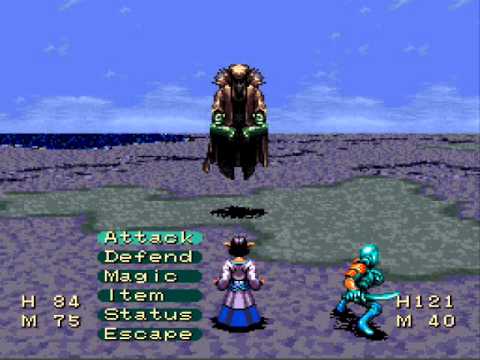
And since I'm in love with my own ideas, I want to talk about my old idea for a Zelda RPG. This was inspired by playing 'The 7th Saga' by Enix on SNES, something I did a lot of as a teenager. This was sometime after Zelda III came out, but long before Ocarina of Time. While playing as Esuna, whom I always played as, I had a moment when I imagined Princess Zelda casting the ice spell. When playing as Kamil,It wasn't too hard to imagine Link there, sword and shield in hand, and suddenly I want a Zelda RPG with battle style identical to 7th Saga. The side-scrolling, overworld map and RPG elements were abandoned after Zelda II, and frankly, I think to the detriment of the series as a whole. I wish Nintendo had been more willing to branch out and experiment with this series. I don't mean to sound bitter, but in my humble opinion, the Zelda franchise has grown stale and over-marketed. I think this can be shown by the release schedule of Zelda games. In the 1980s, two games were released. The decade of the 90s saw four games. The 2000s saw seven Zelda games released. I believe it was during the decade of 2000-2010 when Nintendo missed its opportunity to branch the series in a new direction. But, you know, maybe it's never too late.
----------------------
Zelda RPG anyone?
 |
| Esuna and Kamil - How about Zelda and Link? |
Now take these two characters above and re-imagine them as Zelda and Link. Not hard to do eh? Just put a green hat on Kamil and pretty much leave Esuna the same. At least it wasn't hard for me to imagine in 1996. I thought it would be so cool to play as Zelda and Link fighting side by side. Mario RPG came out at around this time, and I thought it was a fantastic and innovative game. In that game, I enjoyed being able to play as Princess Toadstool or Bowser, and I longed for a chance for the Zelda Universe to expand in a similarly clever way.
It's too bad that we've made it this far without a proper Zelda RPG. I really think Nintendo dropped the ball on that one. By Zelda III, the world was lush and full, ripe for development in an RPG style. The series featured two top-down games and a side scroller with RPG elements. Further expansion of the series into a multi-genre franchise seemed possible then. By now, I worry that it may be too late. Or, is it never too late? How about it, Nintendo?
-D
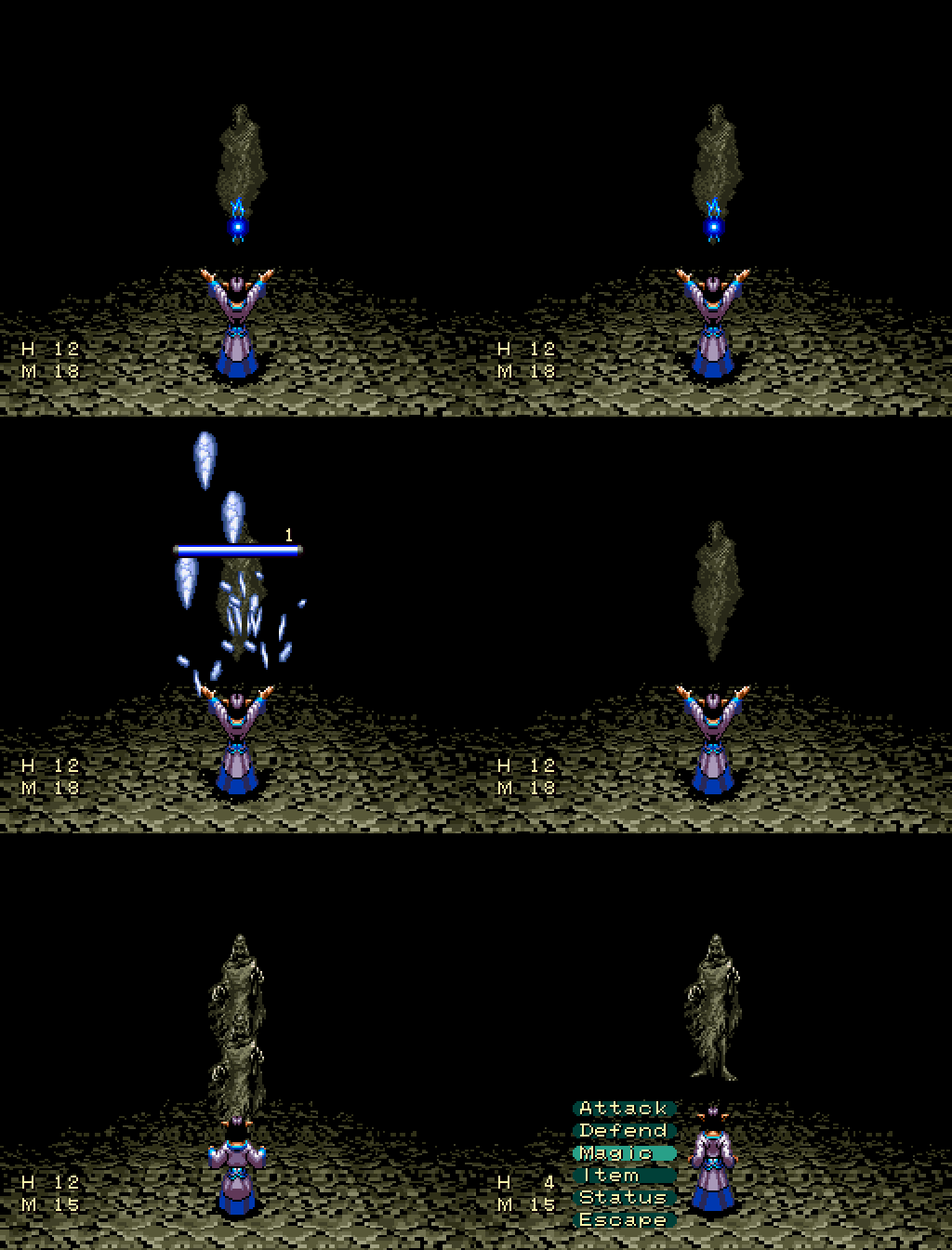 |
| Zelda-- I mean Esuna casting an ice spell. |
Many thanks to:
http://serenesforest.net/forums/index.php?showtopic=38230
for exactly the image I was looking for.
Saturday, September 7, 2013
IRL vs gaming vs challenge vs fun
Typing about my imaginary Gardening game got me thinking about other In Real Life (IRL) activities that may be simulated in games. There are some obvious ones: Racing, for example. I hear that Grand Tourismo series, and its competitors, are all about the ultra-realism in terms of physics. I hear that Mario Kart is all about ultra realism in terms of fun. I think they both succeed in their own ways.
But In Real Life, things are always way different from games. For example: In games, the risk-reward system is... well, skewed. When you wreck your car, even in the most realistic of all racers - you don't die. You don't break your pinky finger. You're not even scarred for life! Hell, for that matter, you probably get a continue or something. This is an extreme example.
It's not just video games. In baseball, for another hyperbolic example, you aren't ritually executed when you are thrown out at first. This is good, because being thrown out at first happens a LOT. Hundreds of times every day during the regular season. But playing baseball is WAY harder than playing video games. Then again, it pays better, I think.
But I guess I mostly want to talk about challenge. There's a pretty fun article about challenging games over at Gamasutra. I've been enjoying it. It's got a lot of tasty retro stuff that I love. It's a long article- thankfully presented in ten tasty bites- I've been reading it over a series of days. It emphasizes skill building, and expertise at different games. I think I'm more interested in the quality of challenge in games, than the amount of challenge.
Sometimes the challenge is in achieving a perfect balance. And that balance can be elusive. Following the garden example, proper watering is a real problem when nurturing a plant. You can fuss with a plant so much that you kill it. Smothering can be as bad as neglect. It is this way in other IRL activities, like cooking. There is also a fine balance struck with cooking. You can definitely worry a dish into mediocrity, when leaving it alone may have produced something fantastic. I do this all the time. Are there any games that demonstrate this sort of delicate balance?
I guess I'm looking for something like this in gaming. And as I'm typing, I thought of an interesting idea: Achievements . That is to say, what if a game was released with no achievements whatsoever, and the achievements were submitted by players after they had made them. Just submit a screencap, and the game moderators will decide if it is a worthy achievement. Then keep a directory of them. That could be fun. Has a game done this yet? I bet team fortress 2 has. It seems like the kind of game that would do that. Anyhow, I'm stumbling into seriously out of touch zone, so I should shut up.
But yeah, it's fairly obvious why many IRL features aren't included in games. They don't sound fun at all. Like, for example, the RPG trope of 'life points' and 'potions.' Got a gaping wound in your belly? Down a couple potions, you'll be fine. Life doesn't even closely resemble that. Most of us don't deal with gaping wounds, just scratches and tiredness. Food helps, and caffeine, but there are no potions. There is Nothing that works like that.
And, like I said, it doesn't sound fun to have to rest your RPG characters because they're tired from walking around all day. A game where your characters need Exercise, a balanced diet and plenty of rest. BO-ring. And yet, somehow it sounds interesting to me, to balance the in-game system with more realistic needs. I often find myself contemplating Player Stat and Item systems for imaginary RPGs that are more realistic, somehow. I think this means I am a giant nerd.
-D
Wednesday, July 10, 2013
MMORPGs - are they for me?
Or do I just want to play Ultima forever? What's a cranky gamer to do?
I have a confession to make: I have very little experience with Massively Multiplayer Online Role Playing Games. Given that Role Playing Games are my favorite genre, and I write for a blog about video games, and MMORPGs are like, the biggest thing to happen to video games in a decade - I think this represents a pretty substantial hole in my game playing experience and perspective.
Now granted, I did play FF XI to about level 20 or so, and gained dual class. And I've watched 5 seasons of 'The Guild.' Also - I once lived in a house where three of my roommates split their rooms up so that they all slept in one room, and then the other room was dedicated to WoW. During that time, I picked some of the MMO experience through osmosis. So I'm not utterly without knowledge of MMOs. But I do realize that the MMO experience goes deep, and I just float above the surface, making observations.
But maybe i'm like a pelican or a kingfisher, maybe I can float above the surface, but dive in and grab a fish every so often. The metaphorical fish being some sort of intellectual point that I want to make, somewhere, somehow. Anyway, this topic came up because I was writing some thoughts about a game called Ultima: Exodus and going on and on and on-- as I am wont to do-- when I came to a point where I wanted to make a comparison to MMOs, and then make a series of claims about MMOs. At this point, I felt I should break this subject off to its own post, and focus in on MMO vs Ultima: Exodus.
It isn't unusual to talk about the Ultima series in context with MMORPGs. Ultima Online is widely credited as the first successful MMO. In addition, there's this great article about the Ultima series, humbly making the claim that it is the most important game series ever. And giving the series credit for a lot of what became genre tropes for MMORPGs. For example, open world gaming and multiple choice conversation mechanics.
In addition, outside of said article, I have made my own observations from playing Exodus. One is the sort of 'guild' element: the option to have up to 20 custom made characters with which to build a party. This element served my household well, as there was enough space for me, my two sisters and my Dad to all have four seperate characters. In practice, this led to a lead party, the original party that we delved into the game with. This one would have the highest levels, the strongest gear, and progress the furthest. Then there were the splinter groups: characters we would make just because making characters was fun. They might not progress very far, or gain much gear. But if we liked a particular character or party, we could boost them up with some grinding, into a legitimate party option for the lead team. This actually turned out to be a pretty good idea, as there are certain class differences that can become primarily important in the game. For example, I think the Mystic Sword may only be able to be equipped by a Fighter or Barbarian. I remember getting to a point and realizing that I couldn't equip it to anyone in my party. In addition, you may find that your party just needs a bit more brute strength or a bit more magic to accomplish a given goal. So it is really helpful to have additional characters leveled up.
All of this contributed greatly to a 'team effort.' The younger kids might not be up to the task of raiding the tougher dungeons, but we were a match for the goal of grinding away and raising characters to decent level. This allowed our family team to, in effect, accomplish multiple goals at once. Similar, I think, to MMORPGs of today. Though, of course, Exodus was neither massively multiplayer or online. But it was Multiplayer on a small scale, it just required taking turns rather than simultaneous play. And why not?
So this brings me to confront my ignorance about MMORPGs. Like, do any MMOs have similar elements to what I described above? The only example that pops into my head is "Realm of the Mad God." Which does a lot of things right. I like the 8-bit graphics. I like the team play. I'm not wild about the shmup style action. I know it sounds strange, but I kind of wish for a turn-based MMO, even if that seems counter-intuitive. Also, Mad God doesn't do much for customization, as far as I can tell.
Alright, at this point, I should mention that I am feeling very rigid. Like, what I really want is just for Ultima: Exodus, NES version, to be online so I can play it with my friends in exactly the same way I played with my family. I realize this is not going to happen and it borders on delusional. But I still want it. I mean, what are video games if not escapism? What's more escapist than a deluded fantasy about reliving my own childhood- today? Anyway, maybe there's something deeper in there, but if you'll excuse me, I've got to go to work.
-D
P.S. Big Congrats to Jaconian and Conklederp for being awesome!
Saturday, June 22, 2013
Read my chips - books and video games, vs or co-op?

Of all media, my first love was books. Before I'd ever seen an 'Intendo' or played Atari, or, as far as I can tell, even watched TV, my Mom would read to us kids every night before going to sleep. And I don't mean to brag, but she was a fantastic reader. My Mom always loved children's lit, and she read with great enthusiasm. It didn't hurt that she had tastes suited to her particular talents, the two favorites being Shel Silverstein and Dr. Seuss. Highly lyrical writing, my Mom would read these to us over and again in her bubbly, sing-song reading voice, and we grew to love and anticipate reading time. She would hold the books open for us to see, and I would follow my mom's voice and the words on the page, slowly decoding them as I learned to read myself.
The first career I ever wanted was to be a novelist. Long before I knew anything about what it was like to have a job, or support myself, I was sure I wanted to write books. The earliest effort I can still recall was a story about Dragon Warrior II (fanfiction!). I borrowed the plot, setting, names and most of the action from the game, but I filled in the details. I seem to remember I finished the first chapter and it was maybe ten binder pages long. It involved the main characters being sent on their journey by the king, and then going to the weapon and armor shop to buy their gear, then going to the Inn to sleep. Pretty generic, I know, and yet I still remember what the town looked like in my mind, the real-world variation on the 8-bit Dragon Warrior graphics.
The power of the imagination is really amazing to me; even (seemingly) generic, unoriginal thoughts have their own unique qualities. And books have an amazing ability to bring this out in people like me. Even a writer who spends very little time on character description - my mind will simply insert a character of my own making based on... it's own arbitrary decisions, I guess. Nothing can quite do this for like a book. I'm not sure why, but I think it may be the fact that there are no pictures. That through words, only, my imagination builds a world of depth. (I'm really going to begin speculating here, so... consider yourself warned. )
If the internet explosion of fan art is any indication, other people get their own inspired images video games and other media. Not to mention my own example of Dragon Warrior II. However, that example was informed by the act of writing, the imaginary world took shape as I wrote about it. I am tempted to cite the lower-detail, symbolic imagery of DW II and other 8-bit games, not to mention comics and cartoons-- in an effort to claim that the more realistic graphics of movies, tv and modern video games somehow dumb down the imagination and don't challenge it as much. But that's probably bullshit. I mean, there is intuitive sense there, but I have seen plenty of movies and had dreams about them, and seen new worlds of creativity using the imagery contained within.
It's not like I can measure this shit, but I am wildly tempted to place video games and books in a Versus context, instead of co-op, as I did with my DW II writing as a young'un. Am I just aggressive and cantankerous? Or is there something there, and I can't quite figure it out? Whatever the case, I do know that I'm prone to asking rhetorical questions, so that must count for something.
In conclusion, I haven't been playing a lot of games lately, and I feel like what I really need is a good book. I'm thinking Murakami. I also think that books and games are fundamentally similar, and obviously different. I'm mostly interested in how they are similar, and I'd like more of that part, please. Thanks.
-D
Saturday, July 7, 2012
Gamer Identity 4A
When I read Conklederp's First Post, it got me to thinking about my own gaming identity. Since then, I've had this topic brewing in the back of my head. First, I pondered the subject of gender in games. This subject sure is a minefield, but there has been some pushback. The money raised from the kickstarter for Feminist Frequency's proposed series on video games far exceeded their original goal. This shows a demonstrated interest in breaking down negative females stereotypes and creating a safe place for female gamers to participate. Fortunately, the internet has also provided a forum for different Gamers to express themselves. As a greater number of women identify themselves as gamers and make their voices heard, in turn, there will be a great number of ways in which they identify and express themselves within the lense of gaming.
However, my focus has shifted away from Gender in gaming, and more toward my own personal identity. What sort of gamer am I? As I play games, and post on this website, I've noticed certain trends. One is that I like to criticize things. This has been going on my whole life, I used to catch a lot of shit from my sisters for it. Another thing is that I am very much a retro-gamer. I don't put much effort into catching the speeding train of the latest and greatest in the gaming world. My hard-core gaming days are long behind me, but I still care a lot, and, more importantly, think I know what really matters in games. This has led me to the conclusion that I am a Cranky Old Man gamer.

Not unlike Cranky Kong himself, I am many years out of my depth. About the time Donkey Kong Country came out, I felt I was on top of the gaming world, I knew everything that was worth knowing, I was confident and life was good. Over the years, I've fallen out of touch, but I still feel very passionately about video games and what they have to offer. Fortunately, I have been kept afloat by emulators and indie games. Playing these games with a critical eye, I hope to get closer to answer the question: what makes games so great?
Until then, I'll be in my rocking chair, with my controller on my lap. Telling you what's wrong and what's right in the world of gaming. Even if I don't really know what I'm talking about, I can wave my cane for emphasis.
Subscribe to:
Posts (Atom)